Inside a Spooky Podcast with Q.L. Pearce

Samantha M Clark here, and I was recently interviewed by Q.L. Pearce for the Haunted Nights Live! podcast. I had a blast talking about THE BOY, THE BOAT, AND THE BEAST, writing and the fun of spooky middle-grade books. Since Q shares my love of spooky MG, I thought I’d get to know more about her and the podcast she helps to host. Here’s what she said…
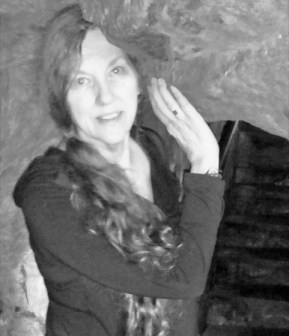
Q.L. Pearce
Q.L. Pearce

Thanks for joining me on Spooky Middle Grade, Q! What made you want to write spooky books for kids?

My family is British, so ghost stories are programmed into my DNA. When I was a child, we moved to Florida and lived on an island in Tampa Bay. There were a few kids about my age on the island. We’d often hang out and trade comics. While my friends picked out Archie or Superman, I forked over my allowance for House of Mystery and Strange Tales. I also loved TV shows such as Alfred Hitchcock Presents and Twilight Zone. It didn’t take long for me to start writing my own stories, which I would share with my friends whether they wanted to hear them or not. A neighborhood mom once complained to my mother that her daughter couldn’t sleep because of my spooky stories. I was sent to my room early that night. My mom crept in later with a bowl of popcorn, and I shared my scary tales with her.

I won my first school writing contest at age nine and my first city-sponsored contest at age eleven. By that time, I was hooked on the horror genre. Swimming Lessons, the opening story in my first Scary Stories for Sleep-Overs book, is based on something spooky that happened on the island when I was a kid.

Can you tell us about some of your recent books?

Spine Chillers by Q.L. PearceI write in a variety of genres and age ranges, but my favorite is scary middle grade. My most recent is Spine Chillers: Hair-Raising Tales. There’s no link between them, but Spine Chillers is in the tradition of Scary Stories for Sleep-Overs. It’s a collection of short stories that includes classic ghosts, a monster or two, invented urban legends and one tale that is an homage to The Twilight Zone. The stories are created for reading aloud at a sleep-over or under the covers with a flashlight.

Picture book author Mem Fox once said, “Writing for children is like writing War and Peace in haiku.” I think that describes short stories perfectly. They oblige the writer to develop characters and plot concisely, while still telling a satisfying tale that’s fun to read. I’m currently working on the next collection.

You host the YA and MG days of the Haunted Nights Live podcast. Can you tell us about the podcast and how you got involved?

Thorne & Cross Haunted Nights Live! has been part of the Authors on the Air Global Radio Network since 2014, and it’s one of their top-rated shows. The hosts, legendary horror writers, Tamara Thorne and Alistair Cross, have interviewed many of my favorite adult horror authors and filmmakers. I was thrilled when they decided to expand the show to include books for younger readers and invited me to join them as MG/YA host. I have a lot of wiggle room when it comes to guests, so I also cover mystery, fantasy, and science fiction. It’s a wonderful opportunity to chat with the authors of books and films I admire. The show can take some surprising turns, and it’s always fun and illuminating.
Tamara and I are close friends. We started chatting at a book signing some twenty years ago and haven’t stopped talking since. We occasionally take road trips together to visit haunted hotels, abandoned buildings, and ghost towns for research. I must admit that Tamara is the brave one and I’m a chicken. When we encounter something a little bit frightening, I’m the first one to the exit.

Why do you think spooky books are important for young readers?

More Scary Stories For Sleep-Overs by Q.L. PearceOf course kids have varied likes and dislikes when it comes to reading, but I think spooky books can have many benefits for those who enjoy the genre. Children of all ages deal with tough feelings like anxiety, fear, and uncertainty. Books are a safe way of experiencing a scary situation without any real risk. A scary book gives kids a chance to think through difficult circumstances and build confidence. They can also put the book down if they feel uncomfortable. Scary stories can help children recognize the consequences of making poor choices; like going into that abandoned old house alone! In a very real sense, it empowers kids and can turn reluctant readers into lifelong book lovers. Still, horror for young readers is a balancing act when it comes to age range. What’s scary to a first grader probably seems silly to a fifth grader, so an author has to know the audience well.

What were your favorite spooky books when you were a kid?

When I was a kid, I didn’t read a lot of scary books specifically for children, but I devoured scary comics. On the first Saturday of every month, I’d ride my bike across the bridge to Mr. McKelvey’s drug store to buy a cherry Coke, a Clark Bar and the latest comics.

As far as books, I was first drawn to mysteries and fantasy. I read the Enid Blyton books and Nancy Drew, particularly those with ‘ghost’ or ‘haunted’ in the title. The Chronicles of Narnia was a favorite. Finally I discovered ghost stories by Edith Wharton and H.G Wells. That led to Richard Matheson, Ray Bradbury and Shirley Jackson. The Haunting of Hill House is one of my two favorite books of all time. The other is Animal Farm. Ray Bradbury is my hero. I love his writing style. I had the opportunity to hear him speak once. He was just as wonderful in person. My favorite quote of his is, “We are cups, constantly and quietly being filled. The trick is knowing how to tip ourselves over and let the beautiful stuff out.”

I love that quote! Listen to Q. L. Pearce interviewing me for the Haunted Nights Live! podcast here.

Q. L. Pearce began her career as a writer and editor with Lowell House/ Roxbury Press in Los Angeles. She has since written more than 150 books for children, both fiction and nonfiction. Her published work includes a dozen collections of scary stories and mysteries, such as Scary Stories for Sleepovers and Spine Chillers, as well as film tie-in books for the Fox animated film Titan AE and the Universal animated series Land Before Time. Red Bird Sings, co-authored and illustrated by Gina Capaldi, received the Carter G. Woodson gold medal for nonfiction picture books, the Moonbeam gold medal, and the Eureka silver medal. It has been adapted for the stage by the Ophelia’s Jump Theater Group and performed at the San Gabriel Valley Literary Festival. Q lives in California with her research scientist husband, two very spoiled dogs, a talkative cockatiel, a bevy of fish and a host of wild squirrels who believe her life revolves around delivering their meals.

Interview with S.A. Larsen Author of MOTLEY EDUCATION

Today, I’m thrilled to welcome our very own S.A. Larsen to the blog! She is celebrating the release of a brand-new edition of her spooky middle grade novel, MOTLEY EDUCATION! Without further ado, let’s see that beautiful cover:

Motley Education - ebook cover

LOVE the purple streak in her hair! Okay, now it’s quiz time. I know, so soon. Can you pitch MOTLEY EDUCATION to me Twitter-style (i.e. in 280 characters or less)?

A misfit spirit tracker & her skittish BFF must elude one ornery school headmistress & brave beasts of Norse mythology to retrieve a relic vital to saving the spirit world, only to discover the true meaning of her quest has been inside her all along. #motleyeducation #mglit

What an awesome Twitter pitch! Now let’s learn a little more about the world of MOTLEY EDUCATION. Sheri, can you finish these sentence starters for me, pretty please?

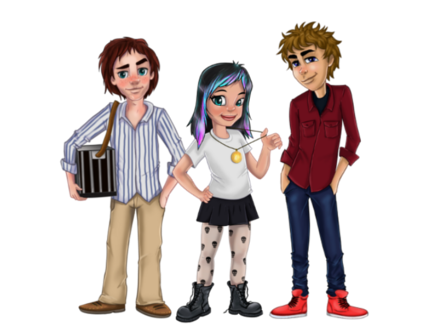
My main character Ebony is…sweet at heart, feisty when cornered, and more courageous than she knows. Her favorite place is the Boneyard, the cemetery between her family’s house and Motley Junior High. It’s where she can be herself. She hangs out there with Fleishman and the only three ghosts she can see – Mayhem, Mischief, and Meandering. She loves them, but they are a constant reminder of how her spirit tracking skills don’t work as they should; her fellow students don’t let her forget it, either. She doesn’t walk around looking injured, though. Instead, she wears a tough exterior – fingerless gloves, miniskirt, tights with skulls on them, and blue and pink strips in her hair. One thing she can’t hide is the guilt she feels for constantly disappointing her mother. See, her mom is gifted. So is her father, younger brother, and weird twin aunts. It’s not fun being different. At least, this is what she thinks at the start of her story. 😉

three_characters_transparency-1

Ebony’s best friend Fleishman is…the best friend everyone wants. He’s honest, loyal, kind, and ridiculously smart, which is convenient during homework study. When Ebony gets a bit too feisty, pushing boundaries, Fleishman is there to reign her in. But he’s not without his own issues. He’s too uptight, needs facts to believe anything, and fears pretty much everything . . . with one exception – his legless lizard Nigel that he carries with him everywhere. Oh, and he rarely laughs at Ebony’s jokes. But she figures he’s missing a funny bone, so she lets it go most of the time.

Motley Junior High: School for the Psychically and Celestially Gifted is…a centuries-old school, where kids with special skills related to Norse mythology can develop, grow, and learn in the proper environment. Once a student is accepted and signs the Terms of Enrollment agreement – which is vital because there are instructions on how to avoid a fire giant attack – he or she is assigned to one of the two school groups. The Sensory group explores the realm of psychic abilities, while the Luminary group charts astrology, the stages of the moon, and creates potions, spells…even a hex or two. *Mankind has drifted so far away from its origins that it has completely forgotten about the World Tree – Yggdrasil and the Nine Worlds. As I’m sure you’ve guessed, MJH has lots of educating to do.

Motley Education - Full Cover with Text

The spookiest part of MOTLEY EDUCATION is probably when…Ebony and Fleishman meet at the Boneyard and random doors begin appearing out of thin air. Mist and green vapor wafts from all sides of the doors, thickening and creeping. A dim light flickers near one of the Boneyard crypts. It brightens until blue and white mist puff out between the seams of the crypt doors and . . . I’d love to keep going, but I’d be giving a spoiler away.

MOTLEY EDUCATION was inspired by…my youngest son’s love for Norse mythology and his drive to overcome his diagnosis of Apraxia of Speech. For those who are unfamiliar, Apraxia of Speech is a neurological disorder, where there are no pathways from the brain to the mouth muscles. Through intensive therapy, new pathways are built, and the child will begin to speak. It’s all pretty amazing.

I hope that readers will…gain the courage to follow in Ebony’s steps by accepting themselves, flaws and all, and embracing who they are – right here and right now. Ebony wanted so badly to be an amazing spirit tracker now, but she learned that it takes experiences to grow and mature into who she wants to be.

Don’t miss S.A. Larsen’s awesome giveaway happening now on Twitter (ends 10/2/2019):

EEqZuu7XUAAEwiY

S_A_Larsen_image2_BnW_s

S.A. Larsen is an award-winning author, childhood apraxia of speech advocate, and major ice hockey fan, who has watched more hockey games than she could ever count. Her favorite stories open secret passageways and hidden worlds to inspire and challenge the heart. She’s also the author of the award-winning young adult fantasy romance Marked Beauty (Ellysian Press 2017). She lives in the land of lobsters and snowy winters with her husband and four children, where she’s writing Ebony and Fleishman’s next adventure. Visit her cyber home at salarsenbooks.com.

Website: www.salarsenbooks.com

Twitter: https://twitter.com/SA_Larsen

Instagram: https://www.instagram.com/sa.larsen/

Facebook: https://www.facebook.com/SALarsen.Author/

Get your copy of MOTLEY EDUCATION today at: Amazon | B&N | iBooks | Kobo | Smashwords | IndieBound

Add MOTLEY on Goodreads – https://www.goodreads.com/book/show/48088441-motley-education

A Chat with Heather Kassner, Author of The Bone Garden

Screen Shot 2019-08-25 at 12.14.57 PM

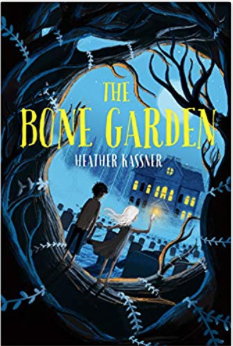
The Bone Garden by Heather Kassner

Release date: August 6, 2019

A spooky and adventurous debut illustrated fantasy novel about a girl made of dust and bone and imagination who seeks the truth about the magic that brought her to life.

“Remember, my dear, you do not really and truly exist.”

Irréelle fears she’s not quite real. Only the finest magical thread tethers her to life―and to Miss Vesper. But for all her efforts to please her cruel creator, the thread is unraveling. Irréelle is forgetful as she gathers bone dust. She is slow returning from the dark passages beneath the cemetery. Worst of all, she is unmindful of her crooked bones.

When Irréelle makes one final, unforgivable mistake by destroying a frightful creature just brought to life, Miss Vesper threatens to imagine her away once and for all. Defying her creator for the very first time, Irréelle flees to the underside of the graveyard and embarks on an adventure to unearth the mysterious magic that breathes bones to life, even if it means she will return to dust and be no more.

“[Evokes] the dreamy tone and themes of Neil Gaiman’s Coraline and The Graveyard Book . . . an impressive new fairy tale that will appeal to fans of Lisa Graff’s subtly magical stories.” ―Booklist

“This magical story―and the brave girl in its pages―will haunt you in the best way.” ―Natalie Lloyd, New York Times bestselling author of Over the Moon

Version 6I love a spooky middle grade novel as much as the next gal, that’s why I am so excited about this interview with debut author, Heather Kassner. Close the curtains, pull up the covers, and let’s get spooky! 

1. Tell us about The Bone Garden.

The Bone Garden tells the story of a strange dust-and-bone girl named Irréelle whose greatest fear is that she isn’t real. A girl who has to be brave and ever hopeful as she navigates the graveyard (and the passageways beneath the graveyard) and seeks the magic that brought her to life—and could return her to dust.

  1.  How did you come up with the idea?

The idea for The Bone Garden started with the very first line, which came to me before anything else. “She descended into the basement, tasked with collecting the bones.” I caught a glimpse of a girl holding a candle in the dark, and from there, I followed her down a twisty staircase to see those bones for myself—and to learn who she was, who tasked her with this strange chore, and, of course, what the bones were used for.

  1. In what ways do you identify with Irréelle?

Irréelle is both vulnerable and hopeful, and having just been laid off from work when I wrote this story, I was feeling much the same. But it went deeper than that too. She also took on many of the feelings I had when I was younger, and which many kids can likely relate to—of being awkward or different or strange, of believing what others say about you, of thinking that you don’t always belong. What I wanted for Irréelle most of all was to be brave and hopeful enough to face the darkness in her life, just as I was trying to do for myself.

  1. The setting for your story is so unique. What is your process for world-building?

Imagining the world of a story, creating its very atmosphere, is one my favorite parts of writing. What helps me develop the world is visualization, specifically, picturing everything in my head as if it were a movie. With my eyes closed (and most often lying in bed), I bring a scene to mind and walk through it, exploring every shadowed corner.

  1. What are you working on now?

I recently submitted copyedits for my second book, a middle grade fantasy that comes out on August 4, 2020, called The Forest of Stars. It’s about a magical, windswept girl whose feet never touch the ground and the search for her father at a magnificent—yet shadow-filled—carnival beneath the stars.

  1. What message do you hope young readers will gain from reading your story?

My hope for younger readers reading The Bone Garden is the same hope I have for Irréelle—to be able to see their own worth unclouded by the perception of others. To trust in their true hearts and to know there is always a place they belong.

  1. What has been the most surprising thing about being a debut author?

When I drafted The Bone Garden, I didn’t know anyone else in the writing community. So being a debut author, the biggest surprise (and what I’m most thankful for) has been getting to know other writers. Making writing friends—and reading one another’s amazing stories—has made this entire experience all the more fun.

  1. If you have one piece of advice for our readers who are aspiring authors, what would it be?

A story I’m working on now came from a dream, and if I hadn’t forced myself to grab paper and pen (when all I wanted was to roll back over and sleep) the idea probably would have slipped away. So, if an idea pops into your head, write it down right away, as many details as you can. Don’t trust that you’ll remember it later.

Bio

Heather Kassner loves thunderstorms, hummingbirds, and books. She lives with her husband in Arizona, waiting (and waiting and waiting) for the rain, photographing hummingbirds, and reading and writing strange little stories. The Bone Garden is her debut novel.

Social Media

Website: http://www.heatherkassner.com/

Twitter: https://twitter.com/HeatherKassner

Instagram: https://www.instagram.com/heather1ee/

Goodreads:https://www.goodreads.com/author/show/17523236.Heather_Kassner

Facebook:https://www.facebook.com/HeatherKassnerAuthor/

USING MYTHS AND LEGENDS AS A SPRINGBOARD FOR SPOOKY STORIES

As a child, I was lucky in that my early education and storytelling experiences included a great deal of folklore, from fairy tales and nursery rhymes to myths and tall tales. When as an adult I began writing my own stories for children, I often found myself drawn to these rich characters and time-tested plots. Ancient tales are some of the ultimate spooky stories. 

For example, one of my early short stories for young readers, “The Three Sisters,” published in FACES magazine, was a retelling of an Australian legend involving the Aussies’ famous evil monster, the Bunyip. After visiting the Three Sisters ancient rock formation outside of Sydney and hearing of its legend, I wanted to recreate the story with a bit more modern flair for young readers. 

I spent a great deal of time researching the Three Sisters legend and the Dreamtime tales of the Australian Aborigines. I even contacted a native tribal leader to learn their version of the Three Sisters story. However, the Aborigines guard their cultural stories closely within their community, passing them down through the generations primarily by word of mouth. Thus, I could not retell their story. But I could use the popular legend of the Three Sisters. It was a composite of local and European lore created by the early settlers. The legend still made for a magical, creepy tale of evil versus good with a quirky twist at the end.  

In light of my experience of using folklore in modern tales, I thought it would be interesting to see how two of my author friends, fellow Sweet Sixteeners, relied on ancient myths in their spooky middle grade novels. Below are their answers to my questions.

Margaret Dilloway

Margaret Dilloway, MOMOTARO, Zander and the Lost Island of Monsters 

 MOMOTARO, Zander and the Dream Thief  Disney Hyperion, 2016 & 2017

1.Were you familiar with the original legend/myth before you even began thinking about a story based on it?

Yes, Momotaro was a story my mother told me when I was growing up!

2. How much research did you do for the story?


I did a lot of research, especially for the second, when I took a trip to Japan. Otherwise I read a lot of books about Japanese mythology, samurai code, and then specifically Japanese monsters.


3. How did you stay true to the folklore?

 
The original story has Momotaro with three friends, a dog, a pheasant, and a monkey. In my book, the dog is a dog but two humans represent the others with attributes of those animals. And the fact that he fights Oni is also the same.

4. How did you change it? And why?


In my book, Momotaro is a half-Japanese, half-Irish boy living in San Diego. I wanted to have a character who is mixed like me and straddles these different worlds as well as the different worlds of magic and humanness. 


5. Based on your experience in writing these MG folklore fantasies, what advice would you give to authors writing folklore adaptations. 

            Adapt the story to something that feels personal to you. 

Sheri A. Larsen

Sheri. A. Larsen, MOTLEY EDUCATION, Leap Books, 2016

 1. Were you familiar with the original legend/myth before you even began thinking about a story based on it?

I was slightly familiar with the original legends and myths threading throughout Norse Mythology and the notion of Yggdrasil – the World Tree. I found the World Tree aspect a fascinating concept. It was my youngest son, kiddo #4, who introduced me to the inner workings of this mythology and a few specific legends that surround such characters as Fenrir the giant wolf, Loki, and Thor. 

2. How much research did you do for the story?

Hours and hours, but I’m kind of a research junkie so that’s all good. My youngest was extremely knowledgeable about this specific mythology, so I gained lots of information and insight from him. But each chat we had left me hungry for more. I couldn’t help myself. The Norse world is so interesting, primarily for a reason I’ve answered in the next question!

3. How did you stay true to the folklore? 

Before I can answer this, let me give you one simple fact about the Norse world: where Greek Mythology overflows with in-depth information, descriptions, characters, tales, and worlds, Norse Mythology does not. That’s the major reason I was so fascinated with it. The more I researched and realized that about 70% of the Norse World was barely developed, the more ideas I conjured on how I could expand on the Nine Worlds within Yggdrasil and their characters. My brain was on fire. Specific to your question, I used references to the more mainstream or better known Norse characters and myths – Loki and Thor – staying true to their natures, but I didn’t use them as part of the story itself.

4. How did you change it? And why?

The world is primarily where I exaggerated or used creative license to develop a new aspect that wasn’t there before. For those who aren’t familiar with Norse Mythology, there are Halls that exist within a few of the Nine Worlds within Yggdrasil – Hall of the Souls, Hall of the Slain, etc… In book I, I used Hall of the Souls, but I created this hall to be a vast display of mankind’s creations and the natural majesty of Midgard (Man’s World – Earth). Of course, there are souls there, too. 

I knew from the start that I wanted to find lesser known and lesser developed Norse characters and embellish on their original tales and/or lives. For book II, I’ve used a character that I could only find one sentence of information on. I’ve had a blast developing her. And just a FYI – I’ve made her a villain. 🙂 

5. Based on your experience in writing these MG folklore fantasies, what advice would you give to authors writing folklore adaptations.

Most importantly, be true to the story you want to tell. Use the folklore to your advantage, finding elements that are based in truth to further your tale.

Sheri and Margaret both reiterated an important point concerning why folklore endures—it contains an element of truth. I hope you’ll be able to read Margaret and Sheri’s spooky adventure stories. If you’d like to explore other modern folklore adaptations, look for Rick Riordan’s PERCY JACKSON series and Eoin Colfer’s ARTEMUS FOWL series and many more! 

Cynthia Reeg is the author of FROM THE GRAVE and INTO THE SHADOWLANDS, middle grade monster adventures. Halloween is her favorite holiday. Check out the spooky jokes on her website: www.cynthiareeg.com.

A Spooky Cover Reveal: Sarah Cannon’s TWIST!

Sarah Cannon has a new book coming, February 11, 2020, and we’re here to show you its full awesomeness below!!

Here’s the flap copy:

Oklahoma, 1983:

Eli has a dream. He’s going to be the next Stephen King, and he’s just created his best monster yet!

Neha has a secret. Her notebook is filled with drawings of a fantasy world called Forest Creeks, and it’s become inhabited by wonderful imaginary creatures. But her new friends are in danger…

Court has a gift, both for finding trouble and for stopping it. And when she accidentally ends up with one of Neha’s drawings, she quickly realizes that the monsters raiding Forest Creeks are coming from Eli’s stories. 

When these three creative kids come together, they accidentally create a doorway from Forest Creeks into the real world, and now every monster that Eli ever imagined has been unleashed upon their town!

Now for a short interview and then the amazing cover…

Janet: What inspired the book? And why is it set in 1983?

Sarah: 1983 was an amazing year for pop culture and music, and it was pivotal in another way, too. It was the last year before the 1984 Cable Act was passed, after which cable TV became a standard fixture in American households. Running cable nationwide was the largest private construction project since WWII, can you believe that? At the same time, television content was being deregulated, so it was much easier to cross-market toys to kids through shows. It changed a lot about the way kids play and the way they pretend, and since I was a middle grader in 1983, the “before” and “after” are very distinct in my memory. A lot of the kids’ pet projects in TWIST are things me and my friends did, too, and naturally I always wondered what would happen if we “crossed the streams,” Ghostbusters-style, between one kid’s hobby and another’s. That’s how TWIST was born!

Janet: Tell us more about your protagonists. Give us a feeling as to what they’re like!

Sarah: Eli, Court, and Neha are pretty representative of the dozens of kids in my Tulsa neighborhood back in the early 80s. They’re biking-around-getting-into-things kids, two of them are latchkey kids, and they’re also nerdy kids back before being nerdy was cool. But what I love most about them is the way they complement each other. Court is well-intentioned and brash but sometimes awkward, Neha is passionate in the defense of the people and things she loves, and Eli is a somewhat beleaguered older brother who cares about his sister but would seriously kill for some quiet time to write. Kids were unsupervised and unscheduled a LOT more often in the 80s, and when you found a group of friends you clicked with the way Eli, Neha and Court click, life was 8000 times more interesting. I’ll add that I know many people who don’t think of diversity or cities when they hear the word “Oklahoma,” so it was important to me to reflect the diversity of the neighborhood I grew up in. That said, I want to point out, as I have before, that writing an inclusive cast is not the same as writing with a diverse lens, so while I hope you’ll love TWIST, I also hope you’re reading the amazing surge of Own Voices fantasy out there right now!

Janet: I love STEAM books. What’s “STEAM-Y” about TWIST?

Sarah: This is another thing that’s so important to me about this book. I moved around a lot as a kid (Neha and I have that in common), and I found that various aspects of intelligence were valued differently in different places. I was a bookworm and a writer, and some schools offered me special opportunities because of that– while passing over some of my peers. In other places, I was grandfathered into math- and science-based programs where I was totally in over my head, but there didn’t seem to be any designated space for kids whose primary talents were in the arts. And of course, we know that kids in the margins are under-identified for any kind of enrichment opportunity. For all of these reasons, I did my best to write an adventure that’s not an either/or proposition, but one in which both the arts and sciences are important, and kids work together on a common problem.

Janet: Tell readers a bit about you and your other books.

Sarah: Sure! TWIST is my second novel. The first is ODDITY, which is set in New Mexico and centers around Ada Roundtree’s quest to find her missing sister, Pearl. This process is complicated by how very weird (and often dangerous) Oddity is. Think zombie rabbits, giant spiders, and a city council composed of evil puppets. In short, it’s a lot of spooky fun. As to the “more about me” part, I’m obviously fairly odd myself. I live in a part of my city that’s named after the author of The Legend of Sleepy Hollow, and we have a local “Haunted Neighborhood” tour. I love gardening, cooking/baking, and knitting.

Now for this wonderful cover (drumroll, please):

Twist_ARE_CVR Crop

Sarah: I love this cover so much. I had to show the full wrap, because look at the gorgeous baby snakes! The cover artist captured them perfectly! Court calls them “The Serpenteens,” and they’re some of my favorite “Creeps” (the friendly creatures who live in Neha’s sketchbook.) Geneva Benton was so thoughtful about the cover illustrations, including the 80s elements, like the ribbon barrettes Neha is wearing! You should all follow Geneva at @gdbeeart and check out more of her gorgeous art at https://gdbee.store/ ! She has stickers and prints and all kinds of things. (I may have already placed an order myself!) Her art is joyous and makes me smile every time I see it.

I love this cover, too, and can’t wait to read TWIST!! Sarah adds:

I’d also like to announce a giveaway, in honor of TWIST’s cover reveal! Comment on this post with either:

  1. One thing you love about the 80s, or
  2. One Own Voices book you’ve loved this year!

I’ll randomly select a winner and send you an ARC of TWIST and a treat from the cover artist’s store, and I’ll make a $25 donation in your name to We Need Diverse Books, which supports diverse authors and publishing interns with grant funding, among other good works. I also want to point out that Paypal users can set up their account to make a recurring $1 donation to WNDB every time you make a purchase!

Links:

https://www.amazon.com/Twist-Sarah-Cannon/dp/1250123305/

https://www.indiebound.org/book/9781250123305

https://www.barnesandnoble.com/w/twist-sarah-cannon/1130769015?ean=9781250123305


A Spooky Summer Throwback!

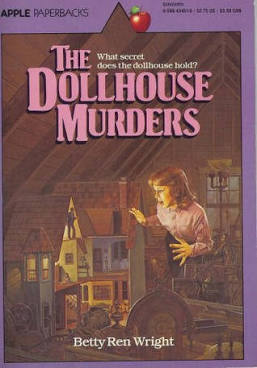
Someone recently asked me where I got my love of all things spooky. I thought on this for a while and realized that the answer is books! I read a ton as a child (still do!) and while I didn’t read exclusively scary books, I did read a few that stand out to me still today. One was THE DOLLHOUSE MURDERS by Betty Ren Wright. The book released in 1983 when I was seven, but I don’t recall reading it until a few years later when I was ten or so. While it has had several different covers, here’s the one I most vividly remember.

Dollhouse Murders

While it isn’t the most terrifying cover image I’ve seen, it did the trick. One summer, Little Lindsay snatched this up and read it until the wee hours of the night. The basic premise of the book is that the main character, Amy, desperately needs a break from her own stressful life and therefore moves in temporarily with her Aunt. In the attic of her aunt’s home, she finds a gorgeous dollhouse – a dollhouse that is an exact replica of the home she’s staying in! Now, that idea alone was enough to put ten-year-old Lindsay on edge, but what happens next really sealed the deal.

The dollhouse comes alive at night. *cue shivers*

Yes, playing with the dollhouse causes the dolls to move at night and Amy soon realizes though a serious of terrifying encounters, that they are re-enacting the grisly murders of her great-grandparents some 30 years earlier.

Guys, this book terrified me. It was well-written and so suspenseful that I could not put it down. I’m pretty sure it also created a healthy fear of my own dollhouse. Even more than that though, it taught me that I like to be afraid! Not for real, of course, but within safe confines, a little fear is exhilarating. Challenging!

I credit THE DOLLHOUSE MURDERS with a lot of things, but especially with inspiring me to write my own spooky books for middle-grade readers. I want others to experience the same rush I did back in 1986, to hide under the covers late at night and read even though their heart is racing and their hands are clammy. I want others to feel the thrill of finishing a spooky book and knowing they survived, and maybe even managed to solve part of or all of the mystery!

If you have time this summer and want to read a throwback to 80’s middle-grade horror, pick up THE DOLLHOUSE MURDERS. Then get yourself a good nightlight. You’re gonna need it.

*Heads-up, friends: one storyline in this book deals with mental illness. Since it was written in the 80’s, it’s quite possible that the representation is different and outdated. Keep this in mind if you choose to read. My love of this book stems from how well Betty Ren Wright handled the suspense/thriller elements, so that’s what I’ve chosen to focus on for this post.*

A Chat with Lisa Schmid, author of the new #mglit release Ollie Oxley and The Ghost: The Search For Lost Gold!

You know when you wait for something and it seems it will never get here? That’s what it’s been like for me to keep this interview under raps!

I met Lisa – in the cyber way – back before Christmas and knew Spooky Middle Grade blog readers would love her and her brand new book baby!

9781631632891
PURCHASE

OLLIE OXLEY AND THE GHOST: The Search For Lost Gold by Lisa Schmid

Release Date: June 18, 2019                                         Publisher: North Star Editions/Jolly Fish Press

Twelve-year-old Ollie Oxley is moving — again. His mom is starting another new job, this time at the Bingham Theater in Granite City, California. Moving all the time means Ollie has struggled in the making friends department, but he quickly connects with a boy named Teddy. To Ollie’s surprise, though, his first friend in town is a little more… unique than those he’s made in the past. Teddy is a ghost.

Befriending someone who lived during the famous California Gold Rush sure does make things interesting for Ollie. But when the school bully, Aubrey, targets Ollie, and it looks like the Bingham Theater might close, the stakes couldn’t be higher. Can Teddy and Ollie work together to take down Aubrey, save his mom’s job, and solve a mystery years in the making?

Hi Lisa! Welcome to our spooky abode. Let’s start with one of my favorite parts of writing – character names. Was there a specific reason or influence that moved you to name your main character Ollie Oxley and his new friend Teddy?

My son’s name is Oliver, so I thought it would be fun to name my main character after him. It turned out to be a great decision in that the name Ollie proved to be highly useful in one of my plot points.

Teddy started as a Toby, but for whatever reason, it just never felt right. I wanted something more playful and loving. After all, what’s more loveable than a Teddy Bear?

What was the hardest part of moving for Ollie this time? What made it different from any of the other times his mom had moved them around?

Moving all the time has always been difficult for Ollie. His mother and sister share a love of the theater which gives them a special bond. Unfortunately, this adds to his feelings of isolation. And now that he’s in middle school the stakes are higher, and the angst is real.

What is your favorite thing about Ollie? About Teddy? About the world you created?

Ollie is sarcastic, but he is also brave and kind. Even though he gets bullied, he never sinks to their level.

Teddy is loyal. He may be a ghost, but he’s got Ollie’s back. He’s not going to let anybody mess with his new best friend. He’s also very mischievous and quite funny. Sometimes I would laugh out loud when writing his dialogue.

I love the tension between the two boys. Over the years, Ollie has built up walls. Teddy is determined to tear them down. It takes a while, but he can be quite persuasive.

I LOVE that you used history—the California Gold Rush—within this story! How hard/easy was it for you to thread information about the gold rush throughout Ollie and Teddy’s journey and, for our young writers reading this, how did you go about doing that?

I live in Folsom, California which is central to the Gold Rush of 1849. When I first started writing Ollie Oxley, I lived in the Historic District. At the time, my son was a baby, so I spent a lot of time on walks. History would present itself in ways that would lend to my story. For example, one day I met a man standing in front of his house. We started talking, and it turns out his home served as the town courthouse in the 1800s. Prisoners were tried on the first floor and if convicted taken to the basement to be hanged. This story, of course, made it into my book!

What about research? How much did you do on the California Gold Rush and ghosts before you began to write this story?

I visited the Folsom History Museum on several occasions. It’s jam-packed with useful information. And of course, what would a writer do without the internet? My browse history is filled with ghost and graveyard searches.

Ollie finds himself in a bullying situation, which some readers will relate. Without giving too much away, how does Ollie handle this at first? From Ollie’s perspective, how can kids his age deal with being bullied?

As the perpetual new kid, Ollie is used to getting bullied. Even though he’s not in show biz, he can put on a good act. He uses sarcasm to deflect bullies and shield himself from their taunts. Also, he is smart enough to understand that when someone is unkind, it’s never about him, it’s more about how they view themselves. Because really, how could someone he just met have it out for him?

What message do you hope young readers will gain from reading Ollie’s story? There’s always a light at the end of the tunnel. Just keep moving forward. And above all, be kind.

Such a wise and important message for readers to take with them. Thank you for sharing yourself, Ollie, and Teddy with us! I can’t wait to see where they’ll go next.

And here’s a little something special for you:

lisa post!

About the Author_greenskulls

lisa head_edited_edited

Lisa Schmid is an author, a stay-at-home mom, and a pug wrangler. When she is not scaring up ghostly adventures, she is most likely scaring up fun with her husband and son. She lives in Folsom, California, home of the 1849 Gold Rush.

Find Lisa: Website | Twitter | Goodreads

Readers, to you have a favorite ghostly adventure? Did it happen to you? By all means, please share!

SpookyMG_Signature

Spooky Writing Tips: Pace Yourself!

    A great spooky read is hard to put down. How many times have you stayed up way too late reading the latest chiller because you just had to know what was going to happen next? That kind of suspense doesn’t happen by accident. Spooky writers use all kinds of tips and tricks to keep readers turning the pages, but the one I use most often is pacing.

Pacing determines when and how a plot unfolds. Folks tend to think of spooky reads as nonstop scares, but if you actually take a novel apart, you’ll notice that every good suspenseful book has a mix of scares and quieter moments. There’s a very good reason for that, and I call that reason the Sea Salt Chocolate Principle. Chocolate is great. People love chocolate. That first bite is so sweet and creamy that it tastes like heaven. But keep eating that chocolate. After enough bites it may still taste good, but it won’t have the same impact on your taste buds that the first bite did. Your mouth got used to the flavor. But sprinkle a little sea salt in your chocolate, and suddenly it’s a different experience. When you get a piece with a little chunk of salt, the salt sets off the chocolate and it tastes like your very first bite again.

Spooky books are chocolate bars. When you buy a chocolate bar, you expect it to be mostly chocolate. And when you sit down with a spooky read, you expect it to be mostly scary. That’s what you signed up for. But in order to keep the scares fresh and exciting, every story needs to be sprinkled with non-scary parts, too. These quieter scenes help a reader’s brain and body relax, so that when it’s time for a scare they have somewhere to go. Scary scenes work the best when they can be contrasted with something else. It gives the brain the cue: Wait a minute, something is different. If I have a quiet scene where a sitter gently tucks a baby into bed, it makes it that much scarier when a short time later all of the lights suddenly go out. As a writer you want to lull your reader into thinking everything is peaceful and normal again, because that’s when you can scare them the best.

Quieter scenes also help get the exposition work done. Scary stories work best when we care about the characters and we are invested in them surviving their scary ordeal. We need to know who they are, what their backstories are, and what they have to lose. Exposition gives us that, but we don’t want to stop in the middle of a dramatic monster-attack scene to explain the characters’ backstories to the reader. Letting your readers see your protagonists enjoying normal life makes those thrill moments feel that much more perilous and exciting, and that’s what keeps folks turning the pages.

Pacing within scenes is just as important, especially for building suspense. Brains naturally process different kinds of texts differently. For example, if I’m reading a rich descriptive scene I might linger over each word so I can really savor it. But when I’m reading an exciting action scene, I’m reading as fast as possible, often skipping over words just to find out what happens next. So when I’m writing, if I can work to figure out a way to slow the reader down during a spooky scene, I can stretch out the suspense and build the tension even more. Sometimes I’ll do that by varying sentence length or using short, staccato sentences that create natural pauses. Or I’ll break up the direct action with some description or character reactions. Think of the way a scary movie slows down the action and builds tension in suspenseful scenes. We see a shadow on the wall. Then the camera cuts to a rat scuttling away. The shadow grows larger. We see a character react. Almost nothing has happened action-wise, but the audience is chomping at the bit just dying to see what that shadow is going to turn into, because we stretched out that moment before the big reveal.

If you find your own spooky stories aren’t quite giving your readers the scare you want, try playing with pacing to make your thrills come alive!

Spooky Moms

When I volunteered to write the Spooky MG Authors blog post airing on Mother’s Day, I knew what topic I would choose. Mothers—of course! After all, don’t monsters have mothers too? For example, Echidna—the half-woman and half-snake creature from Greek mythology—is considered the mother of monsters. Some of her children included Cerbeus, the triple-headed guardian of Hades; the Chimera, a fire-breathing creature who was part goat, lion, and serpent; and the Colchian Dragon, who guarded the famous Golden Fleece.

While we Spooky MG Authors often include monsters in our stories (with or without their mothers), we authors do indeed have mothers of our own. And I thought it quite fitting to ask some of the authors to share how their mothers influenced their writing.

Lindsay Currie(The Peculiar Incident on Shady Street): My mother encouraged and applauded my imagination every chance she got. She scoured garage sales for books I might like, and raptly listened to every story I wrote. Hooray for encouraging mothers!

Victoria Vennerstrom Piontek(The Spirit of Cattail County)  My mom is a great storyteller. She loves quirky people and oddity, and is not opposed to spinning a family story into a tall tale if it makes the telling better. When I tell her stories, she always laughs at all the right spots. As I was growing up, she modeled reading, feminism, and friendship. She also read the pass pages of THE SPIRIT OF CATTAIL COUNTY in one sitting and declared it wonderful. Yep. My mom is awesome.

Samantha Clark  (The Boy, the Boat, and the Beast) My mum taught me to read before I started school. So much so that when I started infant school, she was called in because I wasn’t paying attention and Mum figured out that it was because I’d done all the reading workbooks at home already. The teachers gave me story books to read after that and I was happier.

Angie Siebert(Bone’s Gift) My mom was a voracious reader (mostly of romances) and aspiring writer. She took us to the library almost every week when we were kids. I remember coming home with paper grocery bags full of books. She also wanted to be a writer but never quite achieved it. After she died, I found a box full of things she’d written for the Writers Digest correspondence course. (This was in the late 80s long before online courses, and the course materials probably dated from the 70s! )

Janet Fox(The Charmed Children of Rookskill Castle) My mom was a closet writer of books for young readers. She was prolific, and attended writing conferences, and won awards, and I knew nothing about this until she suddenly died and left a stack of unpublished manuscripts for me to find among her things. Finding those stories inspired me to begin to write my own.  

Cynthia Reeg(From the Grave) My mom is the most sweet-hearted soul. She always encouraged me in whatever I wanted to do (after my chores were done) and bragged about my accomplishments—no matter how small. She taught me to be a hard-worker and to take pride in my work, as well as to have an eye for details. All three of these traits have served me well in my writing. When I was young, my mom and dad bought our family a whole set of Childcraft books, which was an extravagance for them at the time. The writings in those books—from nursery rhymes to fairy tales and beyond—formed my earliest story foundations and helped foster my lifelong love for literature.  

Thank you, Moms, for all your encouragement and support! 

Happy Mother’s Day!

Cynthia Reeg is the author of FROM THE GRAVE and INTO THE SHADOWLANDS, middle grade monster adventures. Halloween is her favorite holiday. Check out the spooky jokes on her website: www.cynthiareeg.com.

Creating Spooky (and Not-so-spooky) Settings

In spooky stories, setting certainly cannot be generic. It’s the place that often makes the story spooky. A haunted house. A dark forest. A dank basement. A graveyard. Of course, “normal,” everyday places can be spooky as well—depending on what’s happening and how well you use the setting. But, if you can’t convey the spookiness (or any other aspect), then even inherently scary places will come off generic, too. So I wanted to share a few tips of conveying and using the setting in your stories.

Spooky settings cannot be generic!

Setting Tips:

  • Know your world. Build a complete one in your head. Know what things look like, where they are, what they sound like, what they smell like, etc. Otherwise, you can’t portray setting convincingly on paper.
  • Only share a bits and pieces of the world, though. Think of the world/setting of your story as an iceberg. You need to know the whole thing, but you’re only going to show the reader the tip of the iceberg, so to speak.
  • Show the setting through your POV character’s eyes. Imagine you’ve put VR goggles on your POV character. What does he or she notice? (BTW, I think the real trick in writing well is striving to keep your reader connected to the story and the world through your POV character’s eyes. Little things like POV slips or lack of setting, for instance, distance the reader from the story.)
  • Select really concrete details to help your reader visualize the setting. Don’t just say the door opened. The oaken slab creaked open.
  • Don’t drop big blocks of exposition to explain setting (or the world). You can’t totally avoid exposition, but huge blocks of it will knock your reader right out of those VR goggles.
  • Do sprinkle clues about the setting and world throughout the action and dialogue. (Not in the dialogue, though. Interweave very brief setting descriptions or directions between what characters say.)
  • Establish the setting every time you open or close a scene—and whenever you change location within a scene. You don’t need to spell out where the characters are in the first sentence but do give the reader some hints within the first few sentences.
  • Don’t forget all the senses. But don’t overdo it—or under do it. Think about what the POV character would notice.
  • Use setting to reflect the mood of the character. If the POV character is scared, for instance, this is going to color how she sees the world around her. Plus you can convey that fear (or joy or sadness) through how you describe the setting.
  • Use setting to show the passage of time.
  • Use setting to foreshadow events.
  • Use setting to ….

I could go on about setting, but you get the idea.  If you want to know more about uses of setting, look into Eudora Welty’s “Place in Fiction.” She felt setting was an underappreciated tool in our writer’s toolkit.

BTW, I did a session on creating a sense of place in fiction at the Roanoke Regional Writers’ Conference this year. I talked about setting and about to imbue it with a particular sense of place. See the first entry under Fiction on my For Writers’ page.

Happy reading–and spooky writing!

Angie

“An intriguing blend of history and magic” – Kirkus
angiesmibert.com
@amsmibert