Welcome to another installment of our author interview series, “5 Questions with…” This time around, we’re talking with Spooky Middle Grade’s Mary Averling, author of THE CURSE OF EELGRASS BOG (January 2024) and the brand-new spooky story, THE GHOSTS OF BITTERFLY BAY, which just came out this week!
1. Mary, tell us about THE GHOSTS OF BITTERFLY BAY. How did you come up with the idea? What inspired it?
BITTERFLY BAY is a fantastical middle grade horror about a group of kid ghosts who haunt a lakeside cabin. They have (perhaps too much) fun freaking out vacationers . . . until something starts haunting them right back. It’s about bravery, storytelling, and the importance of facing the truth, and it’s got MANY weird creatures!
It was inspired by an old cottage my family used to stay at when I was little. I have so many fond memories of that place, but it was built right into a sheer mountainside and surrounded by dark, dense woods. (It also smelled a bit strange and had several creepy carved birds inside). BITTERFLY BAY came from those summertime memories of somewhere strange, comforting, and also super eerie.
2. What books did you like to read when you were a kid? Did those books influence your writing?
I was actually more of a fantasy than a horror reader! I loved Prophecy of the Stones by Flavia Bujour, The Two Princesses of Bamarre by Gail Carson Levine, The Land of Elyon by Patrick Carmen . . . so many! Even now, I still write my books with a strong fantastical element. I like blurring the line between horror and fantasy.
3. What are you working on now?
I’m revising another middle grade horror with my editor (shhhh, it’s a secret). I can’t say much yet, but it’s about anger and monsters and belonging and, y’know, fire powers. I’m excited to share more soon!
4. What was the most fun thing about writing THE GHOSTS OF BITTERFLY BAY?
I loved thinking up shenanigans for the ghosts’ haunting games! If I was a 12-year-old ghost trying to scare people, what would I do? It was fun to imagine haunting as a game rather than something terrifying . . . but it was also fun writing Longfingers and a more sinister kind of haunting, too.
5. What’s your favorite Halloween costume you’ve ever worn?
When I was five, I dressed up as Barbie Girl. (My title). Pink shiny wig, pink shiny dress, rhinestone wand, plastic high heels, and probably some fairy wings to boot. Not spooky, not scary, but I thought I looked SO cool. I always like sharing pictures of this one, because who’d have thought that twenty years later, this little Barbie Girl would get to publish ghost stories? Why not both?!
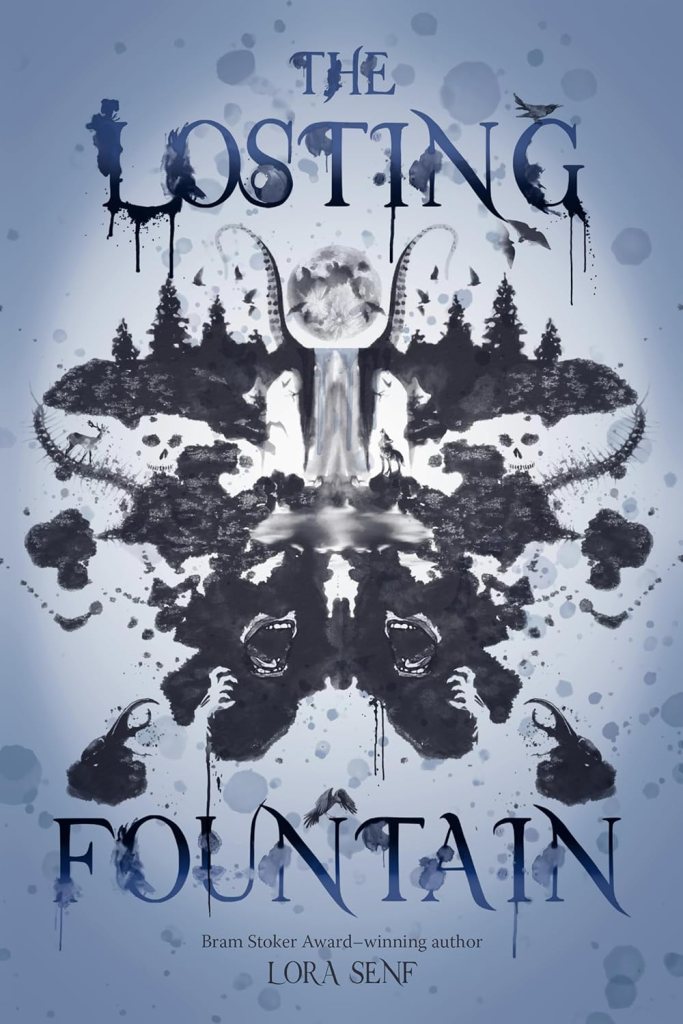
We’re back with another author interview in our series, “5 Questions with…” This month we’re talking with Bram Stoker Award-winning author Lora Senf, whose brand-new novel THE LOSTING FOUNTAIN came out on New Year’s Eve (December 31, 2024).
1) Tell me about The Losting Fountain. What’s the premise and what inspired you to write it.
The Losting Fountain is a dark fantasy story about what it means to be lost, to be found, and to discover our place in the world. Ember, Miles, and Sam—all from different times and places—have been called home. Only home is a place none of them have ever been before. They find themselves on an impossible island where lost things go that want to be found.
As their timelines converge, the choices they make will not only determine their own futures but will also have bigger consequences—they will either restore a cosmic balance or destroy the dams that separate two worlds, ending them both. Ember was called because she belonged, Miles because his mother belonged, and Sam . . . well, Sam arranged his own invitation.
The seeds for this book were planted more than two decades ago when a young child mispronounced lost and found. He called it losting fountain. My brain immediately grabbed on to the idea of such a place—What would be the purpose of a place like that? What would happen there? Who might benefit from it and who might…not? It took me many, many years to work up the courage to try to write a book and The Losting Fountain was my first completed manuscript although it is my fourth published novel.
2) You’ve described The Losting Fountain as “lower YA.” What does that mean to you, and what should readers expect from a book in that category?
If I’m being really honest, I have a hard time with the age classification for a lot of books. Sometimes a story is just a story and can be for anyone—side note, this is why I love middle grade books so much. They are the one category that can be for just about any reader.
In the case of The Losting Fountain, lower YA is as good a category as any. There’s more blood on the page and light swearing than I would put in my straight-up middle grade books but I think it could serve as a really nice stepping stone for young readers who are ready to try a book outside middle grade.
3) What is your writing process? Are you a pantser or a plotter or somewhere in between?
Oh, how I wish I had a process! It seems to change with every book. I suppose a few things are consistent across my books. While I don’t outline, I do have to mull a story over—for weeks or sometimes months—before I start committing words to page. I usually keep about a page of notes that would make sense to only me. That page has ideas or scenes that are vital to the story I’m trying to tell. The document serves as a sort of touchstone for me as I draft the manuscript.
As for the actual act of drafting, I write when and where I can. I have a family and a full-time job so if I want to get anything done, I have to be flexible. There are lots of very early morning sessions when I’m writing a manuscript. Sometimes I write during lunch breaks. Sometimes I write in the family room while my kids watch TV. Whatever it takes to get it done.
4) The Losting Fountain is your fourth published novel, all of which range from spooky to scary. Why are you drawn to horror stories? Do you have your eye on other genres in the future?
I discovered horror very early and never looked back. I jumped from John Bellairs straight to Stephen King and while I was probably (definitely) too young for King’s books, I was hooked on scary stories. As a kid with a lot of anxiety, those scary stories gave me a chance to practice being brave. And, honestly, I just love the feeling of being terrified and safe at the same time.
I won’t say never, but I have a hard time seeing myself writing something that doesn’t have a ghost or a monster (supernatural or human). I keep a list of all the books I want to write and every one of those is on the spooky-to-scary continuum. I may surprise myself someday and take a different path, but I sort of doubt it.
5) What are you working on now?
Right now, I’m working on the fifth Blight Harbor book—this one is a prequel set in the 1990’s and Blight Harbor readers will recognize the cast. The tweens and teens in this book are adults in the Evie Von Rathe books.
I’m also working on an unannounced YA horror that I am very excited about. I’ll share more about it when I can! Oh, and I’m also in the mulling-over stage of an adult horror novel with some pitch-black comedy. I think that will be my next project when these are done.
All that said, I have so much love for middle grade. I have (what I think is) a really good idea for a new series. Time will tell on that one!
Set in a small New England town with a secret history dating back to the Salem Witch Trials, The Witches of Willow Cove is an upper-middle grade series full of magic, mystery, and adventure perfect for readers ages 10 and up. To mark today’s publication of the second book in the series, we’re sitting down with author Josh Roberts for another installment of our Spooky Middle Grade interview series, “5 Questions with …”
1. Tell us about The Curse of Willow Cove and its predecessor, The Witches of Willow Cove.
The first book, called The Witches of Willow Cove, tells the story of a 13-year-old girl named Abby Shepherd, who learns she’s a witch just as a mysterious stranger arrives in town and offers to teach her everything there is to know about witchcraft. The only problem? This stranger might also be responsible for the disappearance of someone close to Abby years earlier . . . and she might have something equally wicked planned this time around.
In The Curse of Willow Cove, Abby has a year of witchcraft under her belt and things are finally starting to go her way—until some of her classmates start vanishing in the night, only to return as something terrifyingly different than before. With the clock ticking and the danger getting closer and closer to Abby’s doorstep, she and her best friend Robby O’Reilly must both decide what they’re willing to risk to save everyone they love . . . before an ancient curse from Willow Cove’s past sinks its teeth into them all.
School Library Journal says that The Witches of Willow Cove series “may be written for middle grade, but the exciting narrative could appeal to young adults,” and that’s exactly what I was going for—a sort of PG-13 story that can genuinely be enjoyed by readers of all ages.
2. What inspired this new book? How did you come up with the idea?
As a lifelong New Englander, I’ve always been interested in the region’s history and folklore, and in particular a mysterious episode from the past called the Great New England Vampire Panic. Back in the late 19th century, farmers and townspeople all across New England became convinced that their dead relatives were rising from their graves as vampires to suck the life from their living relatives. The Curse of Willow Cove began with the question, “What if they were actually right?”
3. Did you love spooky stories as a kid?
My dad was a funeral director and we lived in a spooky old Victorian funeral home for my entire childhood, so in many ways my life was a spooky story. In fact, my dad was the fifth generation in our family to work as a mortician, dating all the way back to the Civil War. I don’t recall reading a lot of scary stories as a kid, but I have always loved inventing them.
The Witches of Willow Cove series borrows heavily from my childhood and teenage years growing up in a New England town just north of Salem, Massachusetts. I became fascinated by the fact that not only were there accused witches all across the state—including one in my hometown—but also that the witch trials did not actually occur in modern day Salem.
That was the kernel of the idea that kicked off the whole series: What if the town you were living in had a secret witch history you didn’t even know about . . . and what if something about your own family history tied you directly to that distant past?
4. What is your writing process?
It changes and evolves with every book. Earlier in my writing career, I was a meticulous outliner. I had to have every scene and chapter mapped out and working perfectly before I could even begin to put words on the page. But what I found is that it made the writing process less interesting for me once I sat down to actually craft the story, because it didn’t leave a lot of room for surprises.
With the first book in The Witches of Willow Cove series, I went entirely the other way—I just started writing without any idea of where it would go. That proved to be a little too exciting because it led to a few dead ends that I struggled to resolve in my early drafts.
Where I’ve landed now is a sort of hybrid writing process where I put together a list of ideas, scenes, themes, characters, and settings that I find interesting, and then I start to write with some checkpoints in mind. I have a vague sense of where I’m going and how I want to get there, but there’s still plenty of room for discovery and surprises along the way.
In every scene, I’m asking myself, “What’s the most exciting thing that could happen here?” Sometimes it’s an idea I’ve already settled on. Sometimes it takes the story in a whole new direction. I love giving myself permission to explore those ideas and see where I end up.
5. What’s next for The Witches of Willow Cove?
As with The Curse of Willow Cove, the next book in the series will jump ahead another year—putting the main cast of characters in high school for the first time. So, a new school, new friends, new rivals . . . and lots of new opportunities for storytelling. It’s tentatively titled The Haunting of Willow Cove and I can’t wait to share it with readers, just as soon as I finish writing it!
Praise for The Witches of Willow Cove series
“Roberts is a masterful storyteller. I loved it!” —Lora Senf, Bram Stoker Award-winning author of The Clackity
“A delightfully spooky page-turner . . . Roberts spins an engrossing tale of magic, mystery, and friendship.” —Kirkus Reviews, Starred Review
“The book may be written for middle grade, but the exciting narrative could appeal to young adults . . . A first-tier purchase for public and school library middle grade collections.” —School Library Journal, Starred Review
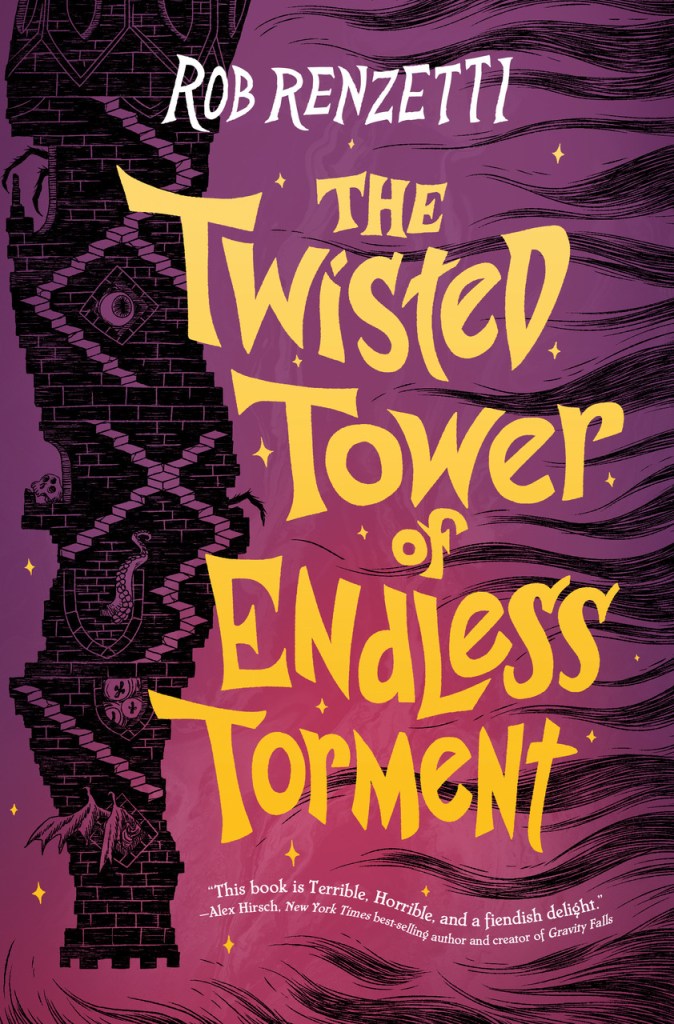
Welcome to the second installment of our new interview series, “5 Questions with …” Today we dig into the twisted mind of Rob Renzetti , who has spent most of his adult life making kids’ cartoons but recently slithered into his new role as a Spooky Middle Grade author. Rob’s new book, THE TWISTED TOWER OF ENDLESS TORMENT, was published last month and we’re thrilled to chat with him about it today!
1. Tell us about THE TWISTED TOWER OF ENDLESS TORMENT.
Well, it’s the sequel to THE HORRIBLE BAG OF TERRIBLE THINGS which follows the misadventures of Zenith Maelstrom, who opens a mysterious bag and unleashes a sinister creature that snatches his sister Apogee and drags her inside the horrible bag to the hidden, hideous world of GrahBhag. Zenith must save himself and his sister from a multitude of terrors.
In TWISTED TOWER, Apogee is anxious to return to GrahBhag to right all that went wrong on their first trip. Zenith is reluctant, but when Apogee finally decides to go it alone, he is forced to follow her. He discovers that their prior actions have made them infamous outlaws: “Wanted Dead, Alive, or Eaten.” The squabbling siblings must settle their differences before they are captured and sent to Eternity Tower, GrahBhag’s most notorious prison.
2. What is your writing process?
I’m a plotting pantser. Or maybe a pantsing plotter. I always have my beginning, middle, and end worked out beforehand with lots of notes and details for sections and chapters that may or may not survive. The way I outline is really a bit of a mess with big ideas and small details all crammed together without much rhyme or reason.
Once I’m ready to write my first draft, I start at the top of that mess/outline and write the story from beginning to end, eliminating the notes as I write the scenes they refer to or as I decide the idea is no longer relevant. There are things I want to happen but I’m not always sure how to make them happen. Finding out how to get there is usually fun and sometimes nerve-wracking.
3. What was the most fun thing about writing THE TWISTED TOWER OF ENDLESS TORMENT?
Writing the section that takes place in the Twisted Tower aka Eternity Tower. It was a lot of fun playing with classic prison movie tropes and characters. All the inmates names are literal. So the old prisoner who’s been “inside” forever is called Old Timer and he carries a stopwatch which he times his every action with. And the bookish inmate who’s in charge of the library is called Four Eyes and is a creature entirely composed of four cantaloupe-sized eyeballs stuck together in a two-by-two grid.
I also incorporated my love for the art of M.C. Escher into the architecture of the Tower. Many of Escher’s images feature impossible perspective applied to buildings and spaces that could never exist and yet seem as convincing as any photograph. I thought his work would be the perfect inspiration for the various perplexing physical spaces and puzzles that Zenith encounters in Eternity Tower. It was a fun writing challenge to describe in prose the sort of wonderful visual confusion Escher achieves in his artwork.
4. What are you working on now?
I’m currently writing the third book in The Horrible Bag series, which has the working title of THE CURSED CLOAK OF THE WRETCHED WRAITH. It’s winding its way through the editorial process as we speak and will be out in Summer 2025. This will be the conclusion of the Maelstrom siblings’ GrahBhagian adventures, at least for now, and it’s been very fun and very stressful creating what I hope will be a satisfying conclusion to my first original trilogy.
5. Last question! What’s your favorite Halloween costume you’ve ever worn?
My first homemade costume, which I created when I was in fifth or sixth grade. I’d been gifted a magic kit that included a black plastic top hat. I never learned any tricks, but I used the hat as the starting point for a Harpo Marx costume, which included a curly blonde wig, tan trench coat, and old bicycle horn. The worst part of the costume turned out to be the hat that inspired it. It was too small for my head and because it was hard plastic there was no way to adjust or manipulate it to get it to stay on. I had to spend the whole of Halloween night holding it on top of my head. But I absolutely loved Harpo Marx and still do so, despite the difficulties, it’s still my favorite costume.
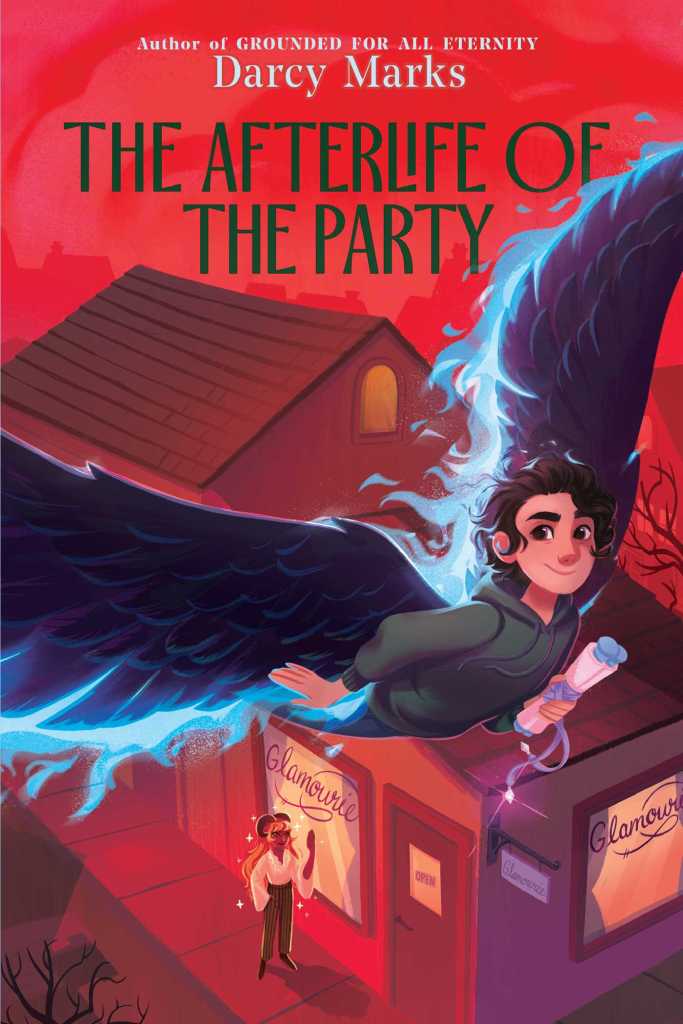
Welcome to our new author interview series, “5 Questions with…” Our first victim—I mean guest—is Spooky Middle Grade author Darcy Marks, whose fantastic novel THE AFTERLIFE OF THE PARTY (the sequel to GROUNDED FOR ALL ETERNITY) comes out in paperback today, July 16.
1. Tell us about THE AFTERLIFE OF THE PARTY.
THE AFTERLIFE OF THE PARTY is the sequel to GROUNDED FOR ALL ETERNITY, which follows a group of regular, everyday kids who just so happen to live in Hell. The suburb part, that is. Also, they can fly. And some of them can do magic.
You know, regular kids.
In GROUNDED, we went on an adventure to Salem, Massachusetts on Halloween night. Fun? Yes! Dangerous? Absolutely! Forbidden? You bet! Which brings us to AFTERLIFE.
Malachi and his friends are home and finally ungrounded, although not everyone thinks they should be. Some of his classmates seem to think he should be spending time in the pit, but Malachi couldn’t care less because there is a new resident in Hell (from Faerie!) and that is a Big Deal.
It’s probably just coincidence that their arrival comes with a once in an eon invitation to an interdimensional mixer with Heaven, right? The adults are just paranoid thinking there’s some big plot afoot.
OK, yes, the ground has started shaking, and there’s been a few breaches into Hell that should never have happened, and OK, not everyone trusts Morgan’s expertise with glamour and the deception it involves. But it’s just a party.
What could go wrong?
2. What is your writing process?
Stare into the void and hope the Universe makes the words appear…
OK, but after that doesn’t work (and it never does), I start drafting.
My writing process is kind of like an onion, lots of layers! My favorite author of all time, Terry Pratchett, once said that the first draft was just you telling yourself the story. (As a person who does not outline ahead of time, this is important.) The first draft is not supposed to be perfect, it’s just getting it all out there so you, as the author, understand what the story is and where it’s going.
After I have that framework laid out, I go through it again, and start adding more details. Maybe I add other subplot points or backstory or get deeper into the mythology or character development. Then I go through it again and add more. Once I feel like I have the story fully fleshed out, then it’s time to cut, because at that point there might be some repetition or scenes that don’t really fit anymore. My last go through is really trying to make sure things are tight and ensure that everything is there for a reason. Sometimes I have to kill my final darlings, alas.
3. How did you tailor the level of creepiness or scariness that you wanted for the book?
So, here’s the thing: Kids like horror, and there’s not as much tailoring for the audience as you’d think. A lot of adults think you have to really tone down the scariness when you write for kids, but if you read MG horror, you’ll start to notice that it’s not just scary for kids, it’s scary! There are legitimately scary-to-me MG horror books out there that feature all of the same horror tropes and elements that you’ll see in adult horror.
I’ve never felt constrained in my storytelling in that way. In both GROUNDED and AFTERLIFE, the scariness and creepiness flowed with the story. If I were to compare the difference between the two, I would say GROUNDED has more of the traditional in-your-face bad guy scariness, but in AFTERLIFE the fear is more based on the enemies being inevitable, that feeling like there’s nothing you can do to stop what’s coming. It’s more existential.
4. Why do you think kids are drawn to scary stories?
I think partially for the same reason adults are. Scary stories get your heart racing and the adrenaline pumping! They’re exciting and fun. Kids love Halloween and it’s not just for the candy, there’s excitement to being out on the street in the dark going house to house. To strangers’ houses! There’s a rule-breaking, societal norm defying feel to the holiday and that’s not even getting into thoughts of what might be lurking in the dark…
That love translates very easily to scary stories or movies. And there’s another side to it. Beyond the excitement, kids are already functioning in the world where there are a lot of unknowns, and they don’t really have a lot of control over what happens on a day-to-day basis. MG Horror let’s kids experience the creepiness of the unknown and see the kid overcome the bad guy, and typically the kid main character is succeeding where adults have failed.
There’s something truly empowering to see that happen and to learn that you’re strong and capable and brave, and that just like the main character you can overcome bad things too.
5. What’s your favorite Halloween costume you’ve ever worn?
This is embarrassing. When I was a kid my mom made all of our costumes, but that’s not the embarrassing part! My mom made fantastic costumes! The embarrassing part is that I just desperately wanted costumes like my friends had.
Now, I was a kid in the 80s, and the commercial costumes at the time were these terrible plastic masks with plastic aprons with the costume printed on it. Seriously, Google it. It’s terrifying. Anyway, I begged for a store-bought costume, and I was Smurfette. I can still feel the condensation under the mask and the sweat from the plastic.
It was terrible.
So that’s not my favorite Halloween costume but that one stands out (as well as the robot costume my brother wore that he couldn’t bend his legs in. That was hysterical!).
My favorite Halloween costumes were ones I did as adults: Columbia from Rocky Horror Picture Show, Sailor Mercury from Sailor Moon and a horror circus costume of my own design. They were great and I put them together myself which always makes them more rewarding!
THE AFTERLIFE OF THE PARTY and GROUNDED FOR ALL ETERNITY are both on sale now. Check them out at your favorite bookseller today!
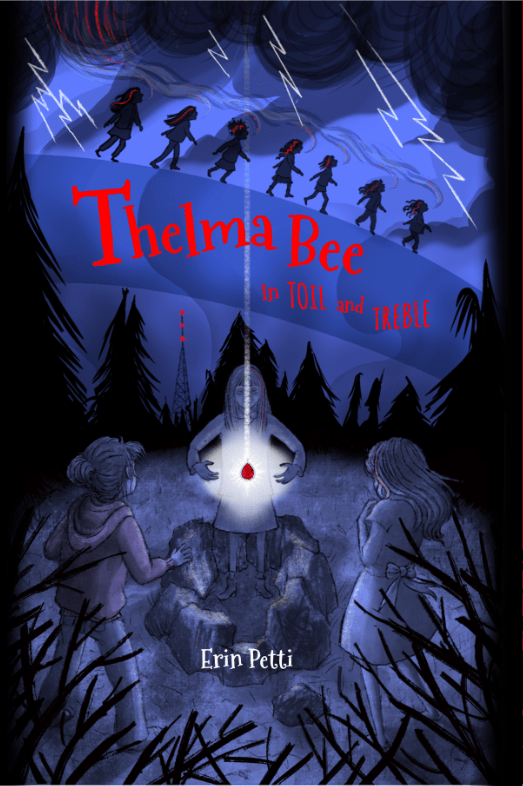
Spookies rejoice! Not only does September usher in the start of Spooky Season, a new book has arrived TODAY to get you in the spirit! I was so glad for the opportunity to ask Erin Petti about her newest book, THELMA BEE IN TOIL AND TREBLE.
TANIA: YOUR TITULAR CHARACTER THELMA BEE RETURNS WITH A NEW ADVENTURE FOLLOWING THE FIRST BOOK IN THE SERIES, THE PECULIAR HAUNTING OF THELMA BEE. WHAT CAN YOU TEASE ABOUT THIS NEW BOOK?
ERIN: TOIL AND TREBLE is filled with danger, witches, tacos, deep dark woods filled with unknown creatures, and pleather-clad Hollywood ghost hunters who might just botch the whole thing if Thlema’s crew can’t save the day.
There’s also a lot of growing up, which can sometimes be even scarier than ancient curses.
TANIA:THELMA IS A VERY SMART AND INQUISITIVE GIRL WITH A KNACK FOR SCIENCE. IS SHE BASED OFF ANYONE YOU KNOW IN REAL LIFE? WHY DO YOU THINK IT’S IMPORTANT TO HAVE A CHARACTER LIKE HER AS THE LEAD?
ERIN: While I was writing Thelma I kept asking the question: What if a kid was impervious to the hang-ups that often hold middle schoolers back? What if she didn’t care about what other people thought of her on a superficial level? What if she could shake off bullies like a puppy shakes off rainwater? She really took shape from there.
I think it’s important (for me, as a writer) to have an active protagonist who is filled with ideas and desires because it really moves the story forward. And for readers, I hope her bravery and intelligence, along with her foibles and missteps, light a little spark of “I can do anything too…” inside.
TANIA:IN THE FIRST BOOK, THE PECULIAR HAUNTING OF THELMA BEE, THELMA HAD TO DEAL WITH SUPERNATURAL EVENTS WHICH CONFLICTED WITH HER RATIONAL AND SCIENTIFIC MIND. HOW HAVE THE EVENTS OF THE FIRST BOOK CHANGED AND PREPARED HER FOR THIS NEXT ADVENTURE?
ERIN: In book two she’s got a whole new world view, and she’s starting to understand complexities in a whole new way. Things are not black and white. Sometimes the right choice isn’t the obvious choice. Now she truly knows that anything is possible, which makes things a whole lot more complicated. You know, growing up stuff 🙂
TANIA:ONE OF MY FAVORITE PARTS OF THE FIRST BOOK WAS THE LIVELY CAST OF CHARACTERS. WILL THEY ALL BE RETURNING, AND CAN WE LOOK FORWARD TO MEETING ANY NEW FACES?
ERIN: Yes! All Thelma Bee’s friends return in the second book and I’m so excited to introduce some new characters as well. There’s a pair of pleather-clad TV ghost hunters who make quite a splash in town, and a brand new friend named Bobby who is pure chaos and probably one of my favorite characters I’ve ever written!
TANIA: WITHOUT GIVING TOO MUCH AWAY, WHAT IS YOUR FAVORITE PART OF THELMA BEE IN TOIL AND TROUBLE?
ERIN: Oooh…OK, this is a tricky question because I don’t want to give spoilers! But I will say that Thelma has to team up with an old adversary while they are lost in a cursed forest…things get pretty dicey, but I really love what happens next!
TANIA: DO YOU THINK WRITING A SEQUEL IS EASIER OR MORE DIFFICULT? WERE THERE ANY CHALLENGES YOU HAD TO OVERCOME TO WRITE THIS STORY?
ERIN: I think writing the sequel was much harder, but it was also more fun! I was so worried because the characters mean so much to me and I wanted to do right by them – which made writing a little slower at first. But once I really understood the story that Thelma had to tell, the RVPS crew basically started speaking for themselves and it was an awesome ride.
TANIA: EVERY SPOOKY MIDDLE GRADE AUTHOR HAS A REASON THEY GRAVITATE TOWARDS WRITING SPOOKY STORIES. WHAT’S YOURS?
ERIN: I think that I am really inspired by the in-between spaces, be that in-between adulthood and childhood, or in-between living and dead, realistic and fantastical. The supernatural is a wonderful, huge, exhilarating question to explore and I just can’t get enough.
TANIA:HAVE YOU EVER EXPERIENCED ANYTHING SUPERNATURAL IN YOUR OWN LIFE?
ERIN: When I was in college I worked at The House of the Seven Gables in Salem, MA as a costumed tour guide. High Edwardian collars and the whole deal. My grandmother Peggy brought her psychic friend Debbie on one of the tours and afterwards Debbie told me that when we were up in the attic, and I was talking about the dollhouse there, there was a little girl ghost dressed in white watching me! But she said, no worries because it seemed like she liked having me there. My little Salem ghost girl BFF!
TANIA: WILL WE BE SEEING MORE OF THELMA BEE IN THE FUTURE? WHAT’S NEXT FOR YOU?
ERIN: I am working on the third Thelma Bee book as we speak! The intention is to make Thelma Bee a trilogy, but I always want to leave the door cracked open to more adventure. These folks feel like really good friends now, and I will have a hard time saying goodbye.
TANIA:WHERE CAN READERS BEST CONNECT WITH YOU?
ERIN: I love connecting with readers! I’m active on Instagram @erinpetti and Twitter at @empetti – also there’s an Erin Petti, Author Facebook page as well. I’ve met tons of amazing readers this year doing workshops at schools and libraries as well and all that info can be found at erinpettibooks.com/visits.
Welcome to my interview with Author Dan Poblocki and his latest release TALES TO KEEP YOU UP AT NIGHT! **Teachers, Parents: With the spooky season creeping every so slowly upon us, this is the perfect book to add to your reading list.
Amelia is cleaning out her grandmother’s attic when she stumbles across a book: Tales to Keep You Up at Night. But when she goes to the library to return it, she’s told that the book never belonged there. Curious, she starts to read the stories: tales of strange incidents in nearby towns, journal entries chronicling endless, twisting pumpkin vines, birthday parties gone awry, and cursed tarot decks. At the center of the stories lies a family of witches. And witches, she’s told, can look like anyone. As elements from the stories begin to come to life around her, and their eerie connections become clear, Amelia begins to realize that she may be in a spooky story of her own.
TALES TO KEEP YOU UP AT NIGHT is the perfect next-read for fans of Scary Stories to Tell in the Dark!. An excellent addition to Halloween round ups, middle grade readers will be glued to the pages, up way past their bedtimes, reading with flashlights, as they explore each of these interconnected stories. With frightening artwork at the start of each chapter, this book keeps readers engaged and terrified from beginning to end.
THE INTERVIEW🎙️
Hi Dan! It’s great to have you visit our spooky crypt. Let’s start with this: A description of Tales To Keep You Up At Night appears in the local newspaper. What does it say?
What do you do if you find a mysterious book in your missing grandmother’s attic? If you’re Amelia, you try to return it to the local library. But what if the librarian says the book doesn’t belong there? Amelia reads the creepy tales within – stories about bad birthday parties and scary sleepovers, about revenge gone wrong and weird rocks out in the woods, about a family of witches who may or may not have the right to be very angry – and by sunset she realizes that the stories are not just stories. Like the title of her new book suggests, Amelia won’t be getting ANY sleep tonight.
That would definitely draw in some attention.
Set the stage as the story begins and what happens when your main character Amelia sneaks into an old attic.
Amelia’s story begins when she and her family are at Grandmother’s house to finally clean it out. Grandmother has been gone for a year. Amelia’s mothers say Grandmother has passed on, but Amelia doesn’t believe it. Annoyed, Amelia sneaks up to the quiet attic and remembers a dream in which Grandmother hands her a book called Tales to Keep You Up at Night. To her surprise, the very book is lying on the dusty floor. Is this a clue about what really happened to Grandmother, or is this just another library book? Flipping through the tales, Amelia soon learns that the answer is a little bit of both, but also . . . a little bit of neither . . .
Like most of your books, Amelia’s story is grounded in spooky elements. What makes this spooky world different or unique from the other scary tales you’ve written?
Tales to Keep You Up at Night is my first foray into short stories. So that feels unique. Like many of my previous work, I was inspired by the books I read as a kid, books that kept my eyes glued to the pages, and that was my goal here, as it has been since I started writing. There are many elements in TALES that I pulled from my own previous work, and perceptive readers might catch clues about how my other books are tied together in a great big web, just like the short stories in TALES. Another unique aspect of Amelia’s story was being able to play with format; there are tales in this new book that are homages to the styles of classic American story-tellers, that are written in unusual Points Of View, and even one that is a series of journal entries. It was a fun challenge to change things up in these ways.
Sounds like a great book for all students, but especially for those reluctant readers out there.
STORY CHARM🌟
You’ve inserted other stories within Amelia’s main story. Would you share how you made it all fit together?
It was like piecing together the biggest puzzle I’ve ever worked on. Simply put, I first mapped out which tales would be in the novel. Then, I wrote them, one by one. And as I went along, I noted characters and elements from the tales that might overlap with others. Once I understood that ALL of the tales related to Amelia’s own life, I leaned hard into making those overlapping details as strong as I could, so that the entire book reads more like a novel than a collection of tales. Though, now I can see that the book is BOTH of those things, which I think is pretty cool.
And I’m sure readers will think that’s pretty cool, too!
Do you have a favorite scene in the book?
In the tale called “The Volunteers,” a series of horrifying events befalls a family after they reject a gift of pumpkins from their witchy neighbors. By the end of the story, the main character realizes he’s all alone, in the dark, and he reflects back on his life, and his family, and what got them to this place. These little moments click together in his mind as he scrambles to write them all down. It’s a whirlwind of thought and emotion and worry about the choices he must now make, and every time I reread it, I get chills. The details feel real and true, and this makes the moment even scarier.
#GULP
AUTHOR’S CORNER 🖊️
What is the hardest part about writing?
The hardest part for me is the waiting. I find that most times, I can push myself to put down words on the page easily enough (especially if I don’t think of them as overly-precious words), but then, waiting to hear back from other people about what they thought or if the manuscript will sell, and finally, everything that leads up to a book coming out into the world is so stressful. But it’s also out of my control. The best thing I can do in those circumstances is start writing something new, just for myself. That’s what I can control, and that’s what keeps me grounded. Keeps me going.
What do you believe young readers can gain from reading spooky tales?
I can talk about what I gained from reading spooky tales as a young reader: a love for turning pages to find out what will happen next; for Story with a capital S; a sense of how to solve problems that scare you; that there may be a way out of the dark if you look hard enough; that children can be (and sometimes need to be) as brave (or braver!) than any adult. And especially: If a story feels TOO spooky, you can ALWAYS put the book down and say, NOT TODAY, DAN POBLOCKI, YOU SCOUNDREL! (Trust me, I don’t mind.)
Any advice for teachers and parents out there on how to encourage middle schoolers to engage in more independent reading and writing?
Thinking back to what first got me excited and engaged: Reaching for what felt accomplishable. Sometimes those were books with lots of pictures, or comic strips, or comic books, and then, eventually graphic novels, even poetry and short story collections. I’m not saying these things are necessarily “easy” but they have an added appeal for reluctant readers that other books might not. I liked being able to finish reading something, even if it was a page or two long. So, maybe, let kids read what they want to read, don’t push them away from what you think isn’t right/ sophisticated enough for them, and then encourage them to explore what might be directly adjacent to their interests, to expand the Venn diagrams of their minds.
Inquiring minds want to know: What can your readers expect from you next?
Next up are MORE TALE TO KEEP YOU UP AT NIGHT. Specifically, another novel of interconnected scary stories that piggybacks off of Tales to Keep You Up at Night with new characters, new settings – even some familiar names and faces. You won’t need to read the first collection to enjoy this next one, but it certainly won’t hurt (at least . . . I hope it won’t. I can’t make any promises!).
JUST FOR FUN🤪
Have to ask: What scares you?
Many of my early nightmares were about giant mouths filled with sharp teeth, which is weird because now that I’m a little more grown-up, I have an irrational fear of being eaten alive . . . By fish, bears, pythons, alligators, even by hungry humans! NOPE. NO WAY. (NOT TODAY.) I still have a difficult time looking at photographs of animals (especially from the deep ocean) with wide jaws and their mouths full of little serrated blades. Yowch! Please, never show me a picture of a shark. I will fall to the floor and cover my head, and then I’ll be embarrassed and you’ll be embarrassed and no one will have a good time anymore, at all, ever.
Um, yeah . . . you probably should stay away from giant teeth. LOL
Thank you for sharing your spooky tales with our readers! All the best to your from your #SpookyMG crew!
THE AUTHOR
Dan Poblocki is the co-author with Neil Patrick Harris of the #1 New York Times bestselling series The Magic Misfits (writing under the pen-name Alec Azam). He’s also the author of The Stone Child, The Nightmarys, and the Mysterious Four series. His recent books, The Ghost of Graylock and The Haunting of Gabriel Ashe, were Junior Library Guild selections and made the American Library Association’s Best Fiction for Young Adults list in 2013 and 2014. Dan lives in Saugerties, New York, with two scaredy-cats and a growing collection of very creepy toys.
About the illustrator: Marie Bergeron was born and raised in Montreal. After studying cinematography, she attended École de Design. Her style is inspired by many things, including films and games, contrasting a more graphic approach with organic strokes. Her clients have included Marvel Studios, Paramount Pictures, Warner Bros., Fox Entertainment, and more.
*So Readers, what do you think about Dan’s new book?
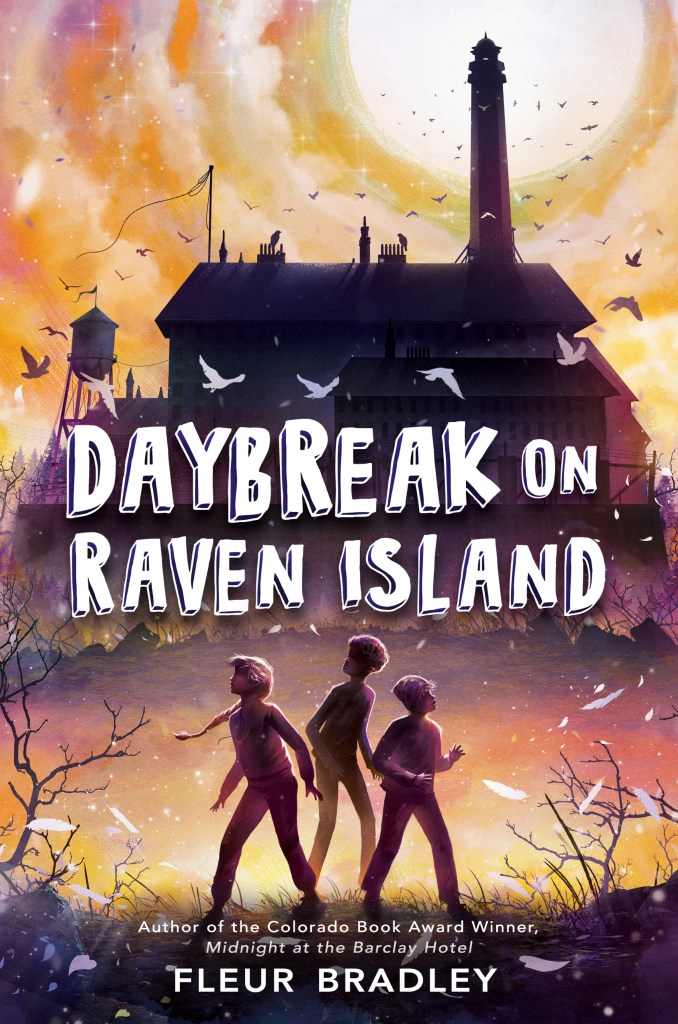
Here we are, on this magical, mysterious day to celebrate the launch of…(drumroll)…DAYBREAK ON RAVEN ISLAND by Fleur Bradley! Look at all these guests! And all this glitter! Golly!
I’m making my way now to the talented Fleur for an interview. Fleur, oh, Fleur! Hi there! I hope you’ll let me ask you a few questions, starting with this one…
This party venue is perfect! Tell us why you chose it.
You know, there’s nothing like an abandoned prison and a flock of ravens to set the mood… Also, there are always plenty of ghosts—er, guests to make for a hoppin’ party without having to send out invitations. They just show up.
You look fantastic. Who are you wearing?
Thanks! I decided to wear my best cargo pants, so I have plenty of room for flashlights, skeleton keys to mysterious locked doors, and my phone of course.
Spectacular, and I love the feathers sticking out from the pockets!I see all the yummy goodies over there. What kinds of treats are you serving?
It’s been a challenge to get good food to Raven Island, but I made the best of it. There’s some canned soup and day-old bread for dinner, and I think there might be a random energy bar floating around. Of course I did bring cupcakes. It’s no party until there’s cake…
Now, of course, every party must have a theme. How would you describe yours?
I would say it’s Alfred Hitchcock meets the Twilight Zone… Watch out! The ravens come swooping down sometimes, especially when you’re trying to eat a cupcake. There’s a raven leader named Poe; watch out for her.
Ooo, Poe. The master of Ravenhood. Now for party favors! What are you giving away?
There’s a whole ring of old skeleton keys—Tori, Marvin and Noah tell me they unlock the secret to Raven Island. You can take one, if you think you can survive the night on Raven Island. There’s also an old diary that holds a lot of secrets to a prison break long ago, but I wouldn’t touch that if I were you.
And games! Let’s play!
Tori is all about playing soccer, but there’s no soccer ball to be found. She’s a little cranky about that. We’re playing ‘run from the ghosts,’ ‘duck from the ravens,’ and ‘what does that key unlock?’
Seriously, now, give us the skinny on your book. All the bells and whistles.
All kidding aside (that was pretty fun, though), here’s the book jacket description of Daybreak on Raven Island. It’s out on August 23rd, and I hope you’ll consider reading it!
From the critically acclaimed author of Midnight at the Barclay Hotel comes a thrilling new middle grade mystery novel inspired by Alcatraz Prison.
Tori, Marvin, and Noah would rather be anywhere else than on the seventh-grade class field trip to Raven Island prison. Tori would rather be on the soccer field, but her bad grades have benched her until further notice; Marvin would rather be at the first day of a film festival with his best friend, Kevin; and Noah isn’t looking forward to having to make small talk with his classmates at this new school.
But when the three of them stumble upon a dead body in the woods, miss the last ferry back home, and then have to spend the night on Raven Island, they find that they need each other now more than ever. They must work together to uncover a killer, outrun a motley ghost-hunting crew, and expose the age-old secrets of the island all before daybreak.
Sounds cool, right? If you go to the Wandering Jellyfish Bookstore or Second Star to Right Bookstore to order, I can even personalize the book before it gets shipped to you. And there some very cool preorder giveaways, like a Raven Island map….
About Fleur Bradley:
Fleur Bradley has loved puzzles and (scary) mysteries ever since she first discovered Agatha Christie novels. She’s the author of numerous mysteries for kids, including Midnight at the Barclay Hotel, which was on many award lists, including the Reading the West, Agatha and Anthony Awards, Sasquatch Award, and won the SCBWI Crystal Kite Award, Sunshine State Young Readers Award and the Colorado Book Award.
A reluctant reader herself, Fleur regularly does librarian and educator conference talks on ways to reach reluctant readers. Originally from the Netherlands, she now lives in Colorado with her family and entirely too many rescue animals. Find out more about Fleur at http://www.ftbradley.com and follow her on Twitter @FTBradleyAuthor.
This week, I sat with spooky crew member Ira Marcks to discuss his graphic novel, Shark Summer. In addition, I wanted to learn about his creative process and get the skinny on his new book, Spirit Week, available October 25, 2022. So, without further ado, let’s wade into the spine-chilling waters of graphic novels.
Lisa: What inspired you to make Shark Summer?
Ira: I’ve always wanted to make a comic about kids on a summer adventure. But I could never find a way into the story that didn’t seem like it’d been done before. Then one day I was reading a book about the making of JAWS and I thought to myself “wow, what a wild, madcap summer that must have been for the cast and crew.” It got me thinking… is there a more iconic summer adventure than the one JAWS captured on film? Suddenly, I had my inciting incident; a sleepy New England island is overrun with a Hollywood production. Now, all I had to do was decide what happens to the people who live there behind the scenes.
Lisa: What can readers expect from the story?
Ira: A fast paced, nostalgia infused, summer adventure about new friendships, filmmaking, and the creepy secret history of a New England island!
Lisa: What were some of the challenges of turning this story into a graphic novel?
Ira: The most difficult part of the process was trying to find the right balance of cartoon humor, horror movie tropes, and real world consequences. Shark Summer takes place on Martha’s Vineyard in the summer of 1974 during the filming of JAWS. While I worked hard to convey the geography and spirit of this time and place, there were also choices to be made about how to use these elements to tell an inspirational comic for kids. My editor Andrea Colvin deserves a lot of credit for helping me find the best way to tell this story.
Lisa: How long have you been interested in comics? Is this what you wanted to do when you “grew up”?
Ira: Comics are a balance of drawing and writing so while I loved to draw as a little kid, I soon realized that I couldn’t tell a good story with a comic unless I practiced my writing. Putting those two skills together inevitably led me to making comics! I’ve always been good enough at it to keep a few people interested in what I was working on, and I built my ‘career’ from there.
Lisa: What’s the best writing advice you have received?
Ira: I like the quote by fantasy novelist Terry Pratchett that goes “The first draft is just you telling yourself the story.” Which is to say, the later drafts are intended for the reader. I think it’s important to distinguish a first draft from the rest of the process. To be honest with yourself is crucial to the early stages of a project. So when you bring other cooks into the kitchen and begin to edit and clarify the story, there will always be a seed of truth left from that first draft you wrote for yourself.
Lisa: I see you have a new graphic novel coming out on October 25, 2022. Please tell us about Spirit Week.
Ira: It’s kinda like a sequel to Shark Summer. In the second book we join Shark Summer’s aspiring filmmaker Elijah Jones as he heads off to Colorado to make a documentary about a reclusive horror writer who has been living at a certain infamous hotel.
Ira Marcks is a graphic novelist based in Upstate NY. He make comics, teaches comics, and podcast about cartoons. His books have been recommended by The New York Times, BuzzFeed, and American Library Learn more: https://lnk.bio/iramarcks
There’s been some big news in the realm of creepy middle grade books lately, and we here at Spooky MG are absolutely over the (full) moon about it.
Each year, the Horror Writers Association presents the Bram Stoker Awards for superior achievement in horror and dark fantasy literature. The list of Stoker winners is crammed with legends: Stephen King, Neil Gaiman, Victor LaValle, Caitlin R. Kiernan. And the award statuette—a gothic, gargoyle-bedecked house, with the winner’s name engraved behind its opening front door—has to be the coolest anywhere in the book world.
(A Bram Stoker Award. I mean, just look at this thing.)
Stoker Award categories have included novel, screenplay, graphic novel, short and long fiction, and young adult novel, among others. Now, beginning with the 2022 publishing year, the HWA is establishing a middle grade category for the Bram Stoker Awards (YESSSS!!!!).
Spooky Middle Grade chatted with Becky Spratford, current Secretary of the Horror Writers Association, about the news.
Jacqueline West/Spooky MG: Hello, Becky! Thanks so much for joining us at Spooky MG, and extra thanks for all you do to promote horror for readers of all ages!
So, to get things started: Why has the HWA decided to add a middle grade category to the Bram Stoker Awards now? How did this change come about?
Becky Spratford, HWA: The discussions about adding a Middle Grade category have been going on informally for a handful of years. It all began in earnest when the Horror Writers Association presented R.L. Stine with a Lifetime Achievement Award at the 2014 Bram Stoker Awards ceremony.
Around the same time, the HWA’s Library committee began their work to promote Horror to kids through public libraries. The HWA Library committee, for which I am a co-chair, administers the Dennis Etchison Young Writers Scholarship http://horrorscholarships.com/dennis-etchison-young-writers-scholarship/ to one teen writer each year, and last year we had a record number of applicants. We also award up to five Young Adults Write Now endowments of $250 each to libraries who offer programming to teen writers of horror. In past years, we did not even receive five applicants, but again, last year we awarded all five and interest this year is already strong.
In 2019 we also launched Summer Scares, a national reading program (which I co-chair) where librarians recommend three titles each in the categories of Adult, YA, and Middle Grade Horror. We then use those titles and authors as a way to get more horror titles and programming into our libraries. The Middle Grade category has seen the largest uptick in interest with authors and library workers.
The HWA’s overall goal is to both support horror professionals and promote the genre. Adding the Middle Grade category to the Bram Stoker Awards slate accomplishes both of these things. Middle Grade Horror is strong. The books are excellent and varied and there is a whole generation of readers growing up with these awesome books. The Board was unanimous in extending the The Bram Stoker Award to Middle Grade Horror Fiction as a way to honor the excellent work in this category as we do for adult and teen horror fiction.
This is such great news – and R. L. Stine paves the way for creepy MG lit once again! Perfect.
(Image via BookTrust)
When will the category be officially put in place? What books will be eligible?
The category begins with all middle grade horror titles published in the 2022 calendar year and will continue every year going forward. Any novel intended for the age group of 8-13 year-olds with a word length beginning at 25,000 words is eligible in a given calendar year. We will be awarding the Bram Stoker Award for the Best Middle Grade Novel (published in 2022) at StokerCon 2023.
What can middle grade authors do if they’d like their books to be considered for the award?
All authors or editors of eligible works are welcomed to submit their own work for consideration by the jury.
Beginning around April, the portal for authors or publishers to self-submit will open on the Bram Stoker Awards website here: https://www.thebramstokerawards.com/submissions/ . You do not need to be a member of the HWA to submit. There is also a recommendation portal for all HWA members to submit titles to be considered in any Bram Stoker Award category. You must be a member to submit an official recommendation, and you cannot submit your own work.
Once those submissions are complete, how are finalists and winners selected?
The Bram Stoker Awards process for every category is the same and it is very clearly laid out here: https://horror.org/awards/rules_current.pdf. However, for the short version, the Bram Stoker Awards use a hybrid system of a closed jury for each category who review the submitted titles and submit a ranked list combined with the recommendation portal mentioned in the previous answer. This allows the general membership to also have a say.
A long list of 10 titles in each category are presented to Active and Lifetime members who can vote for up to 5 in the first round. That vote creates the official “Bram Stoker Nominee” list of 5 titles in each category. Then the Active and Lifetime members can each vote for 1 per category.
Having the HWA support MG horror in this way means so much to those of us who read, write, and love spooky MG fiction.Big thanks to the whole organization.
Can you tell us a bit more about the Summer Scares Reading Program, another way the HWA is reaching out to MG and YA horror fans?
The Summer Scares Reading Program began in 2019 and is an official HWA initiative. It is presented in partnership with United for Libraries, Book Riot, and Booklist Summer Scares provides libraries and schools with an annual list of recommended horror titles for adult, young adult (teen), and middle grade readers. It introduces readers and librarians to new authors and helps start conversations extending beyond the books from each list and promote reading for years to come.
Selected authors agree to make themselves available to libraries (free of charge) in order to promote their titles and Horror in general.
Our committee is made up of 5 librarians and an annual rotating author spokesperson. In the past we have had Grady Hendrix, Stephen Graham Jones, and Silvia Moreno-Garcia, and this year for 2022 we welcome Alma Katsu.
Along with the vetted list of titles, the Summer Scares program and committee also provide a program guide courtesy of the Springfield-Greene County Library District. This guide is free and contains a page for each title containing a summary of the book, read-alike titles, programming ideas, and book discussion questions– really everything a library would need to feature and promote the books.
What else is the HWA doing to support young horror readers and writers?
Besides the Scholarship and Endowments and Summer Scares, we added a high school intern this year. She has been working with our Volunteer Coordinator and her teacher to assist us. We have been able to introduce her to authors, have had her work on blog posts and virtual events. We would love to add more young interns going forward.
And just in general, the work we do reaching out to public libraries to encourage them to add horror titles and present horror programming through the Summer Scares reading program and our sponsors like Booklist and Book Riot who also create content to support middle grade horror reads. We have seen an increase in participation by libraries at the middle grade level every single year. Many libraries have let us know that Summer Scares and our librarian-vetted content has allowed them to advocate for more horror for their grade school patrons without fear of reproach for it being “too scary,” despite the fact that we all know they love spooky and scary reads.
YES. Thank you, thank you, thank you.
Speaking of loving spooky and scary reads: What books do you think of as the classics of MG horror? Do you have any personal favorites?
As I mentioned above, there are not enough superlatives for the work of R.L. Stine, but I tend to credit Alvin Schwartz’s Scary Stories to Tell in the Dark story collections for stoking the horror flame of many a middle grade reader, going back to myself [mid 40s] but still today. I volunteer at my local school library 2x a month and it is still a huge favorite.
In 2020, the HWA released Don’t Turn Out The Lights: A Tribute to Alvin Schwartz’s Scary Stories to Tell in the Dark edited by Jonathan Maberry. This anthology has a diverse and vibrant table of contents featuring modern middle grade horror.
[Jacqueline/Spooky MG note: Hey, we know this one! Spooky MG’s very own Kim Ventrella has a terrifying story in this collection. Find out more here: https://bookshop.org/shop/spookymg]
Becky Spratford, cont: My work with Summer Scares has solidified for me that we are in a golden age of middle grade horror right now. We consider title from the last ten years by living authors for Summer Scares and each year, Middle Grade is always a favorite of the committee come selection time. Clearly, the time to include Middle Grade Horror in the HWA’s Bram Stoker Awards process is NOW.
Hear, hear to all that.
Thank you to Becky Spratford and the Horror Writers Association, and thank you to all of you who read, write, and love spooky middle grade lit.
Here’s to a healthy, happy, horror-filled 2022!
Bios:
Becky Spratford [MLIS] is a Readers’ Advisor in Illinois specializing in serving patrons ages 13 and up. She trains library staff all over the world on how to match books with readers through the local public library. She runs the critically acclaimed RA training blog RA for All. She is under contract to provide content for EBSCO’s NoveList database and writes reviews for Booklist and a horror review column for Library Journal. Becky is a 20-year locally elected Library Trustee [still serving] and a Board member for the Reaching Across Illinois Library System. Known for her work with horror readers, Becky is the author of The Reader’s Advisory Guide to Horror, Third Edition [ALA Editions, 2021]. She is a proud member of the Horror Writers Association and currently serves as the Association’s Secretary and organizer of their annual Librarians’ Day. You can follow Becky on Twitter @RAforAll.
Jacqueline West of Spooky Middle Grade is the author of the New York Times-bestselling middle grade series The Books of Elsewhere, the Schneider Family Award Honor Book The Collectors, and the YA horror novel Last Things. Her latest book is the MG mystery/ghost story Long Lost [Greenwillow/HarperCollins, 2021], which was both an Indie Next List and Junior Library Guild selection. Find her at jacquelinewest.com or on Twitter @JacquelineMWest.










 Spooky Middle Grade