Spooky Author Pets

Here at spookymiddlegrade.com, our pets play a big role in our writing. I asked a few #SpookyMG authors to share stories about how their pets impact their writing.

Kim Ventrella & Hera

Yes, I had to put my dog first 😛 because she’s just too darn cute and she’s been a huge influence on my writing!!! True story, I wrote Skeleton Tree while sitting in a dog bed, while Hera sat on the couch behind me looking over my shoulder. She was basically my first editor, and she gave up her bed so I could have a comfy seat.

She also inspired me to write a story with a dog best friend, i.e. Bone Hollow, and that book is actually dedicated to her 🙂 She’s totally different from Ollie, though, Gabe’s best friend in Bone Hollow. Ollie has a wiggly, carefree spirit, but Hera is a total ball of nerves. She has a major phobia of people and other dogs. Example: when I first brought her home, I had to carry her outside, and if she saw someone walk past the window of their condo (inside) from 200 yards away, she would race back to our house shaking. It would take her 20-30 tries before she could get up the courage to pee. Now, she’s way braver and more comfortable in her environment, but she’s definitely a one-person dog.

Kim Ventrella is the author of Skeleton Tree (2017) and Bone Hollow (2019), both with Scholastic Press. She’s also a contributor to the New Scary Stories to Tell in the Dark anthology coming in 2020 from Harper Collins.

Tania del Rio & Boba & Max

I have two dogs named Boba and Max. Max is a Chihuahua mix about 10 years old, and Boba is a 9 month old corgi puppy.

Max is usually content to lay at my side while I write and it’s nice to have her act as my little personal space heater on cold or rainy days. She’s got really soft ears that I like to pet whenever I’m stuck on a scene and need a moment to think. She’s the “pawfect” writing buddy!

Boba, on the other hand, has a lot of energy and gets jealous of my computer. If I’m not paying attention to him, he lets me know it by crawling onto my lap and getting in the way! He also likes to bark in my face- rude! It can be a bit challenging to get anything done with him around, so I try to take him on a long walk or visit the dog park so that he’ll sleep for a few hours while I work.

Even with the distractions, it’s nice to have pets to keep me company while I write and I wouldn’t have it any other way!

Tania del Rio is the author of Warren the 13th and the All-Seeing Eye and Warren the 13th and the Whispering Woods.

Jonathan Rosen & Parker
parker relaxing.jpg

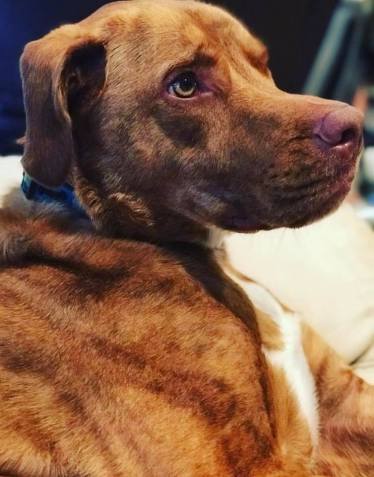
My dog, Parker, is a three-year-old rescue, who we find to be the sweetest dog ever. He’ll usually curl up on the couch next to me when I’m writing. I’ll run ideas by him, and he points out whether or not there are any plot holes. He’s good like that. But mostly, he helps me because whenever I want a break, or am stuck on something, I turn around, pet him, and he basically lets me know that I’m doing okay.

Jonathan Rosen is the author of Night of the Living Cuddle Bunnies and From Sunset till Sunrise.

Patrick Moody & Wicket, Nym & Zelda

I decided to do a critter photo shoot. As you can see, Wicket the hedgehog is a little shy. He’s often rolled up into a little defensive ball of spikes. And even after two years, our cats still don’t know what to make of him. Nym, our black cat, is a serious cuddle bug (and deceptively hefty). She’s usually stalked around the house by our youngest, Zelda, whose quite the handful. I have a theory she’s part squirrel! She loves her big sister, as you can see by the kiss! These three keep me company when I work from home, never far from my keyboard.

Patrick Moody is the author of The Gravedigger’s Son.

S.A. Larsen & Sadie, Molly, Chloe & friends

This is Sadie, my newest writing pup (on the right)! With her being so active I’ve had to move to the kitchen area to keep an eye on her while I write. Makes for an interesting word count . . . and sometimes not much! 😁

The photo collage is of our fur babies that have been with us a while. Molly the cat is my true writing feline, though. She insists on sitting in my lap while I write when I’m in my office. And Chloe is the jokester of the group. I have a video of her literally dancing on my desk and laptop while I was listening to music and writing. Super cute! 🐾

S.A. Larsen is the author of Motley Education and Marked Beauty.

Jan Eldredge & Mr. Bingley

IMG_5577

This is Mr. Bingley. We’re in constant competition over who gets to claim the desk chair or the top of the desk. Mr. Bingley usually wins. He has also laid claim to my spooky fairytale wallpaper, and he loves to rub against it. This would not be a problem, except it’s a flocked wallpaper, and his yellow fur clings to it like magnets to steel. As a result, a small portion of my daily writing time has to be spent vacuuming my wall.

Jan Eldredge is the author of Evangeline of the Bayou.

Janet Fox & Kailash
img_1967.jpeg

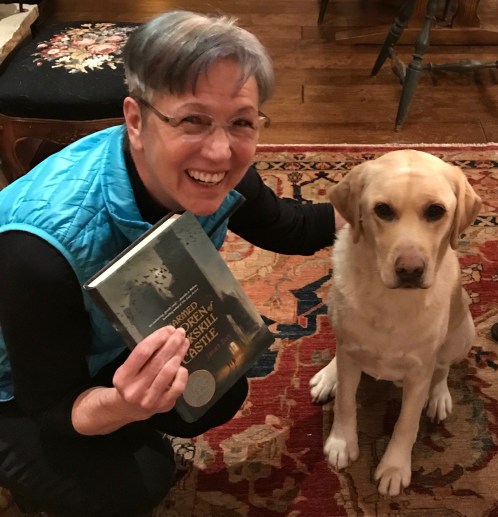
This is Kailash. He’s about 5 years old now, and super friendly and like all Labs he still has a lot of puppy in him. In fact, getting him to sit still for this photo took a bit of wrangling.

He’s too big to get up on my desk (thank heavens) but he’ll occasionally try to crawl into my lap as I’m working. Mostly he is a walking companion, and I walk to get ideas so he’s a great help there.

We’ve never not had a dog for more than a couple of months. And at times a guinea pig or two, a rat or two, and a horse. We’d have a cat but our son is very allergic. But we love Kai. He’s got a big heart and loves everyone.

Janet Fox is the author of The Charmed Children of Rookskill Castle.

Cynthia Reeg & Holly

SkeletonDog Holly

Sadly my dog Holly recently journeyed to dog heaven. She was a constant companion, always ready with ideas and the ability to find perfect napping spots in my office. I can still hear her barks of encouragement, and I know there will be a very special dog in my next spooky story.

Cynthia Reeg is the author of From the Grave (Monster or Die) and Into the Shadowlands.

Angie Smibert & Stella, Maggie, Brick & Hubble

Pet Pics (1)

Here’s a graphic of my editorial “staff” – Hubble, Maggie, Brick, and Stella.  All of them are rescues. I have a two-year-old Lab mix named Hubble (yes, as in the telescope. I am also a space nerd.). He’s a foster fail, btw. I fostered him for the SPCA two summers ago, fully intending to keep him. Maggie (tortie) and Brick (gray) are about 8 1/2, and I got them together when they were just 8 weeks old–also from the SPCA. I picked Maggie out, and then Brick grabbed me from the next cage. They bicker just like the Tennessee William’s characters they’re named for. Stella is the most recent addition. About a year old, give or take, she was living under the porch of the empty house next door. I, of course, was feeding her on my porch–and when the weather turned really, really cold, she got very friendly, and dammit, I took her in. She is a petite sweetie who’s quite happy she adopted me.

More often than not, my guys distract me from writing since I work at home. My previous dog, Bridget, did inspire the dog in Memento Nora! As an animal lover, I tend to give my characters pets. Uncle Ash–in the Ghosts of Ordinary Objects series–has three dogs, all named after beaches in the Carolinas, who follow him everywhere. Plus the third book of the series will feature a ghost dog.

Angie Smibert is the author of Bone’s Gift, Lingering Echoes and other books for young readers.

Happy Book Birthday: The Phantom Hour by Kat Shepherd

I am super excited to welcome our very own Kat Shepherd to the blog!!! Her new book, THE PHANTOM HOUR, releases today!! I recently had a chance to chat with Kat about her new book, a brand new mystery series and much more.

Q: You have a passion for animals, traveling and the outdoors, among many other interests. How have those passions found their way into your writing?
 
A: Like any author, I pull a lot from my own life to put into the stories I write. Lots of my characters are based on former students of mine or other people I know, but there’s always a little bit of me in there, too. In the newest Babysitting Nightmares book, THE PHANTOM HOUR, Clio shares my passions for travel and history and glimpses into the past. And in Book 2 we’ll meet Ethan, who has a really strong connection with animals. I train and foster dogs, so I really wanted to put a character in the series that reflects my own bond with animals.
 
Because I write suspense, I rarely put pets in my scary books, and there’s a really good reason for this. Anytime I see a pet in a scary movie or book, it immediately distracts me, because I get so worried that something is going to happen to it. (I blame Stephen King for this. Animals rarely fared well in his books!) So I intentionally avoid putting pets in, because I don’t want my readers worrying about them like I always did. But in PHANTOM HOUR I couldn’t resist bringing back my favorite dog, Wesley. He passed away in 2013, and I miss him every single day, so it was wonderful to get to write about him and see him come alive on the page. It was a little like getting to spend time with him again.
 
Q: Tell me more about microphilanthropy. Does it ever crop up in your books? How can readers get involved?
 
A: It’s important to me that my protagonists be kind and show compassion and generosity. Not because I’m trying to teach some big lesson to kids or anything, but because I have to spend a lot of time with my characters, and I don’t really like to be around people that aren’t kind or compassionate. Generosity and compassion are driving forces in my life; they absolutely give my life direction and purpose. That’s not to say that I am this supremely generous and compassionate person, but those are the qualities I am continuously striving toward. Failing to get there a lot, but always trying.
 
One of the biggest challenges of my life was that I have always wanted to be this great philanthropist, but I don’t really have any money. So in trying to figure out how to give meaningfully when the size of your wallet doesn’t match the size of your heart, I started pursuing a concept I call microphilanthropy. It’s based on the idea that you don’t need a lot of money to make positive, measurable change in your community. You just need people.
 
Basically, it’s crowdfunding, but rooted in the community. I find local organizations that need small, concrete projects funded: a science club at the library, blankets for the zoo’s chimpanzees, emergency rental assistance to keep a family from becoming homeless. Each project costs anywhere from $100 to $1200. Then I throw a party and invite the organizations to come a pitch their projects to my party guests. Then everyone at the party puts whatever money they can spare into jars we set up for each project. At the end of the night we count up and distribute the money, and the organizations go on to fund their projects. The average donation about $10 or $20 per person, but when you pool that money together, it makes these incredible things happen.It creates a really strong connection between people and their communities, and it feels really powerful to see that you made something amazing happen. The best part is seeing the excitement on my guests’ faces when they realize that they are the reason the library has a science club now, or a family didn’t lose their home. It wasn’t some rich person who did that. It was us.
 
I actually just wrote up a little how-to guide for folks who want to throw their own microphilanthropy party. They can email me at my website katshepherd.com, and I’m happy to send it over or help them strategize.
 
Q: What should readers expect from Book 2?
 
A: While Book 1 of Babysitting Nightmares took the girls into the Nightmare Realm, Book 2, THE PHANTOM HOUR, feels a little more grounded in this world. Clio gets a job babysitting for the Lee family, a new family who has moved into an abandoned old mansion at the edge of town. The Lees are lovely, and Clio is thrilled to get the chance to explore the old mansion… until she starts to realize it may be haunted. Luckily Clio has help from her friends and Aunt Kawanna, and she also gets some unexpected help from her new friend, Ethan, who has a few secrets of his own. Readers should expect a spooky ride of suspense, thrills and chills as Clio works to unlock the mansion’s mysteries before it’s too late.
 
Q: Are any of the thrills and chills from BABYSITTING NIGHTMARES based on real-life experiences?
 
A: Several generations of women in my family have had regular contact with ghosts. Ethan’s Great-Grandma Moina is based on family stories, but I made her backstory a lot more exciting than my own family’s. For my own great-grandmother ghosts very matter-of-fact and not at all mysterious; they were just around all the time. It was much more fun to make Moina a glamorous, professional medium who performed big, showy seances! To figure out how to do that I did a lot of research on the Spiritualist movement and the history of psychic mediums in the US. I even went to a seance in an old Victorian mansion! What I learned was that there were lots and lots of seances back then, but not a whole lot of ghosts. The magician Harry Houdini helped prove that most of the so-called mediums were faking it and using tricks and illusions to fool people into thinking that they were seeing and talking to ghosts. I’m not sure if I was disappointed or relieved to learn that!
 
Like the house in PHANTOM HOUR, my own house was vacant before we moved into it. We are only the third owners, and the last person who lived there was a woman who had lived there for 40 years. After she died her daughter held onto the house for another decade because she couldn’t bear to give up something her mother had loved so much. So we felt a little worried when we moved in that might find her ghost hanging around.
 
A few months after we moved in I went to bed early and my husband was still awake. For some reason he always keeps his dress shoes on after work, and it can be annoyingly loud when he walks around the house. I was awakened by his footsteps in the middle of the night, and I was super irritated that he hadn’t taken off his shoes. But then I rolled over and my husband was asleep next to me! I woke him up, and we both heard a man’s footsteps walking through the house. Our burglar alarm had been set and our dogs were sleeping peacefully, so we knew it couldn’t be an actual person. For some reason nothing about it felt scary at all, and we just went back to sleep. Our house was built by a judge, and we wonder if it was his otherworldly footsteps we heard. So we did end up having a ghostly encounter, just not with the ghost that we expected!
 
Q: What advice do you have for young fans who may be interested in writing their own stories?
 
A: I think one of the best things writers can do is to read a lot. Reading helps give you an instinct for story and language; you learn by seeing how other people do it. I also think it helps to read critically, with the eye of a writer. Read for enjoyment, but then take a minute to think about why you loved the story and what made it so good. Then think about those moments that weren’t so good. Did the story drag? Were there parts you got bored, or the action moved too fast? Reading like a writer is a big part of how I developed my own storytelling style and voice.
 
The other big part of writing your own stories is to WRITE THEM! Put them in a notebook, get a cool journal, or learn to type and store them electronically. If you’re excited to write but feel stuck for ideas, sometimes fanfic is a really fun place to start. Think of your favorite book and write a sequel, or choose a character from a book you love and put them on a new adventure. Create a mashup of your two favorite series. What would happen if the characters met? Spooky stories are also a great way to get started, because it automatically puts your writer’s imagination into overdrive! I teach a spooky story writing workshop, and I’m always happy to email aspiring writers the ideas and exercises I use to get started.
 
Once you get your stories down on paper, make sure you share them! Writers need readers. Ask your friends and families to read your work and share any moments where they got confused or needed more description, as well as those parts that made them laugh or jump out of their seats. Take that feedback and use it to make your story really sing. Writing a first draft is important, but revising is where the magic really happens. Most writers I know absolutely love to revise, because it lets us forget all the nitty-gritty and just focus on making the story the best that it can be.
 
north starQ: What can readers expect next from Kat Shepherd? I hear you may have a new mystery series coming later this year?
 

A: I have a new mystery series The Gemini Mysteries, that debuts on March 5 with THE NORTH STAR. I have been a huge mystery fan for as long as I can remember; so much so, in fact, that I have a mystery-themed tattoo sleeve that continues to evolve as I add more favorites to it. One of the things I loved most about mysteries is the interactive experience of reading one. You’re constantly taking in information, evaluating, predicting, and then re-evaluating based on a changing landscape of clues. So exciting as a reader, and such a great tool as a teacher! This series is especially fun because there is a picture at the end of every chapter with a clue hidden in it, and the reader gets to work alongside the detectives to find the clues that lead to the next step in the mystery.

 
It’s been fun for me, because Babysitting Nightmares and Gemini Mysteries are so different, but there is a lot of crossover between mystery and horror. I like to write fast-paced adventures with a little bit of humor and lots of suspense, and I think both series allow me to do that. I hope my readers will have as much fun reading them as I have writing them!

An Interview with Claribel Ortega, author of GHOST SQUAD

Hi everyone! Tania here. I’m happy for the opportunity to interview author Claribel Ortega whose debut middle grade novel, GHOST SQUAD, comes out this fall. We may have to wait a little while to get out hands on it, but check out this description in the meantime:

The hurricane-swept town of St. Augustine is the only home Lucely Luna has ever known. It’s the same home her father grew up in, and his parents before him. In fact, all of the deceased relatives in the Luna family now live as firefly spirits in the weeping willow tree in their backyard.

Shortly before Halloween, a mysterious storm appears on the radar heading towards St. Augustine, causing Lucely’s firefly spirits to lose their connection to this world. In an effort to save them, Lucely finds a spell to bring them back to life, but accidentally brings more spirits to the town than she’d planned. Ghosts start showing up all around town, some more dangerous than others, wreaking havoc.

Lucely will have to band together with her best friend and occult buff, Syd, along with Syd’s witch grandmother, Babette, and her tubby tabby, Chunk, to fight the haunting head on, save the town, and save her firefly spirits all before the full moon culminates on Halloween. 

Sounds great, doesn’t it? I can hardly wait! Now, let’s get on with the Q+A.

TANIA: I’m very excited to read GHOST SQUAD which sounds very spooky, indeed! But, reading the description, I’m also intrigued by its family themes and elements of magical realism. Can you talk a little bit about how your own background has influenced your story?

CLARIBEL: I’m excited you’re excited about Ghost Squad! The story is very close to my heart and directly influenced by both my childhood and my experience with loss. As a kid, I used to catch fireflies in glass jars with my late, older brother. My family is from The Dominican Republic and we have mythology that says fireflies are the souls of our loved ones who have passed on, and that those fireflies are watching over us. I loved the idea of still having my brother around, looking out for me and that led to Lucely Luna’s story!

TANIA: As an author, why do you think spooky stories are important for young readers? Do you think it’s possible to get too dark or scary when it comes to writing Middle Grade fiction?

CLARIBEL: I think it is definitely possible to get too dark (in fact there was one scene I had to cut from Ghost Squad because it was too scary!) but it also varies on the reader. I was reading Stephen King at a pretty young age, he was my transition into adult books after Ghost Bumps. Did I have nightmares? Yes. Do I recommend it? Also yes.

TANIA: What are some of your favorite spooky books or movies and why?

CLARIBEL: So, I am a giant chicken with spooky movies and will read the Wikipedia plot before I watch to make sure I can handle it lol. I prefer scary movies that don’t rely on jump scares and have a frightening twist at the end (Like THE SKELETON KEY or THE SIXTH SENSE) but normally I lean into the not actually scary but sort of campy/fun spooky movies like CLUE or GHOSTBUSTERS. I can handle a lot more when it comes to books, and as I said I love Stephen King and anything true crime or serial killer related because it’s fascinating!

TANIA: Have you personally ever seen a ghost or experienced the supernatural?

CLARIBEL: I have. Once at my old house, I was constantly seeing a little girl running through the hall out of the corner of my eye. I never said anything until one day I was standing by the stairs next to my older sister and saw her. We both flinched at the same time then looked at one another, eyes wide like “You saw her too?” It was creepy, but I wasn’t necessarily scared. I don’t think she meant us any harm.

TANIA: What advice would you give a young, aspiring writer? Is there something you wish someone had told you when you were starting out?

CLARIBEL: Your career might not unfold how you expect it to but that doesn’t make it any less worth celebrating. Things take a long time in publishing, and it’s okay if things don’t pan out the way you planned, the goal is longevity not instant success. Focus on the things you can control, like your writing, be willing to fight for yourself when you need to, and remember to celebrate the good not just focus on the bad.

***

And there you have it! We’ll be keeping an eye out for Claribel’s book and cover reveal. In the meantime, you can follow her on Twitter or Instragram. Also visit her website to sign up for her newsletter.

DEFEATING YOUR FEAR OF WRITING

black and white blur close up fingers

“Fear is a steal trap,” Gran advises Evangeline, the heroine of my debut middle grade novel. EVANGELINE OF THE BAYOU is the story of twelve-year-old Evangeline Clement, a haunt huntress apprentice studying the ways of folk magic and honing her monster-hunting skills. As soon as her animal familiar makes itself known, the only thing left to do is prove to the council she has heart. Then she will finally be declared a true haunt huntress. Of course, things do not go as planned for Evangeline. And when she and her grandmother are called to New Orleans to resolve an unusual case, she must summon her courage to defeat a powerful evil that’s been after her family for generations.

Gran goes on to warn Evangeline, “Fear keeps you from moving forward. It binds up your courage as well as your smarts.” These wise words of Gran’s hold true for nearly any situation we encounter, whether it be hunting monsters or writing essays.

As the leader of a local writers group for the past dozen years, and having been a member of numerous critique groups, I’ve learned that one thing we creatives all have in common is fear. And we have a lot of them, like: showing our writing to family and friends, getting our work critiqued by other writers, not knowing how to begin our stories, not knowing how to end our stories, or not being able to come up with any new ideas. But one of the most common fears I’ve seen is that of simply getting started, rallying the courage to just jump in and begin the writing of that novel, memoir, or short story. I call it “freezing on the high-dive”. Taking that initial leap can be scary, but it doesn’t have to be.

After discussing this topic with numerous fellow writers over numerous coffees and teas, I’ve come to suspect this particular fear stems from the mistaken belief that we have to get our words right the first time, that somehow a perfect stream of brilliance must flow straight from our head and onto the blank sheet of paper. This unrealistic expectation can lead to a lot of frustration and writing resistance. Fortunately, there are a few easy techniques writers of any age and any writing level can incorporate to defeat their fear of writing and get their words moving forward. These simple tips can be applied to everything from the writing of novels and essays, to the writing of thank you notes.

The first step is to think of the writing process as one that uses two distinct parts of your brain: the creative side and the editorial side. Going into a project while trying to use them simultaneously is when many of us run into trouble. The two parts do not play, or work, well together.

Once you’ve accepted the fact that you’ve essentially just carved your brain into two halves, the next step is to hush that editorial side. Reassure it that it will have its turn to make corrections and clean things up later, but for now it’s Creative’s turn to play. Allow your imagination to run wild and free. Let go of rules and logic. There are no right or wrong ideas in this phase of your project. Don’t worry about choosing the perfect word, and don’t worry about things like spelling and punctuation. That’s Editor’s job for later on.

If you’re still having trouble coming up with ideas, here’s another helpful tip: just start writing. Write anything, even if it’s simply the words, “I don’t know what to write.” There’s something almost magical about the act of putting pen to paper, or fingers to keyboard, that gets the creative tap flowing. Taking away all those expectations of perfection will conquer that fear of not being able to think of anything to write.

Now that you’ve got some great ideas and images, and maybe even some really cool lines of dialogue, let your creative side take a rest. This is the time to set your internal editor free. Allow it to get to work picking and choosing what elements to use, what order to put them in, and making sure the grammar, spelling, and punctuation are all up to snuff.

This is the technique I used while writing EVANGELINE OF THE BAYOU, and I’m using it now as I work on the sequel. Keeping the creative half of my mind separated from the editorial half has helped me defeat my fear of just diving into the writing. It’s helped me overcome my worry that my writing is too sloppy, nonsensical, and filled with mistakes. I know that by setting my creative side free to do what it does best, it’ll provide me with fun, fresh, and unexpected ideas. Sometimes it delivers more ideas than I can use, or ideas that are in need of further research and tweaking, but that’s okay, because I know I’ll soon be unleashing my editorial side to make my words all shiny and clean.

Photo by rawpixel.com on Pexels.com

Right In the Funny Bone: Why Spooky and Funny Are A Natural Fit

If you haven’t done it yourself, you’ve seen someone else do it. They reach a scary moment in a book, or a jump scare in a movie, or even stumble upon a prankster who jumps out at them from behind something– and instead of screaming, they burst out laughing.

boy in black v neck shirt with looking straight to the camera with a shocking face expression

What is it that makes us laugh when all signs point to “AHHHHHH?” Scientists have a handful of theories:

Some say it’s a sort of peace offering– an instinctive reaction to confrontation. Laughing shows we’re not looking for a fight, so whatever’s coming at us will hopefully back down and go away.

Others suggest that laughing is a way to manage our fear. When we laugh in the face of danger, we’re trying to convince ourselves things are less dire than they seem.

But my favorite explanation (and the one that makes the most sense in connection with scary stories) is that laughing when we’re afraid or crying when we’re happy actually balances us out emotionally.

Speaking as a reader, one of the things I love most about middle grade is the way our main characters are centered in their family and community– I draw deep satisfaction from the inherent wholeness and balance of middle grade worlds. As a writer and lifelong smart aleck, shared humor is one of my favorite things to write; to me, it’s a sign of a close, happy community. I can’t imagine penning a family or town where people don’t joke, tease, and mildly snark.

child in blue and yellow jersey shirt with the two other kids
Photo by Snapwire on Pexels.com

As you read this, you might be thinking, “Wait a minute. It’s conflict, not happiness, that drives a story. Especially a spooky story!” You’re right, of course. But it’s also important to remind the reader what your characters are fighting for. Shared humor reinforces a sense of belonging and reminds us what we like about certain characters. Conversely, humor meant to embarrass or bully someone hardens our hearts against a villain.

Wisecracks are also the perfect opportunity to illuminate individual personalities and relationships between characters in a “show, don’t tell” way. For example, when a group of kids has to cross dangerous territory, a competitive best friend or sibling might say, “Hey, your shoe’s untied!” in order to get a head start. The competition between the characters gives them the courage to face the peril.

On the other hand, a nervous friend who’d rather be at home under the covers is more likely to resort to gallows humor, like, “It’s my night to feed the dog. He’s going to be seriously crabby when I die and his bowl is empty.” How other characters respond to this joke will be revealing. Are they impatient? Reassuring? Or do they toss another joke right back?

If you love writing stories with lots of scares, laughter can also provide some much-needed contrast. I adore a runaway horror story as much as the next spooky author, but like true joy, intense fear is hard to sustain. Worse, fear actually gets exhausting after a while. Raise your hand if you write to exhaust your readers. No? Then consider providing moments of levity to give them a break.

This is all well and lovely and I mean every word, but don’t be fooled– I’m no altruist. There are lots of upbeat reasons to put some banter in your book, but you can also use laughs to trap the unwary. I love to use humor to lull my readers into a false sense of security. Then, when it’s time for the next creepy moment, I’ve got them exactly where I want them! So, if you haven’t tried mixing jump scares with jokes, I highly recommend it. You don’t have to be a serious person to deliver some serious scares!

portrait of happy girls sitting


About the Author
47273607_257902428237874_7097488376386813952_n


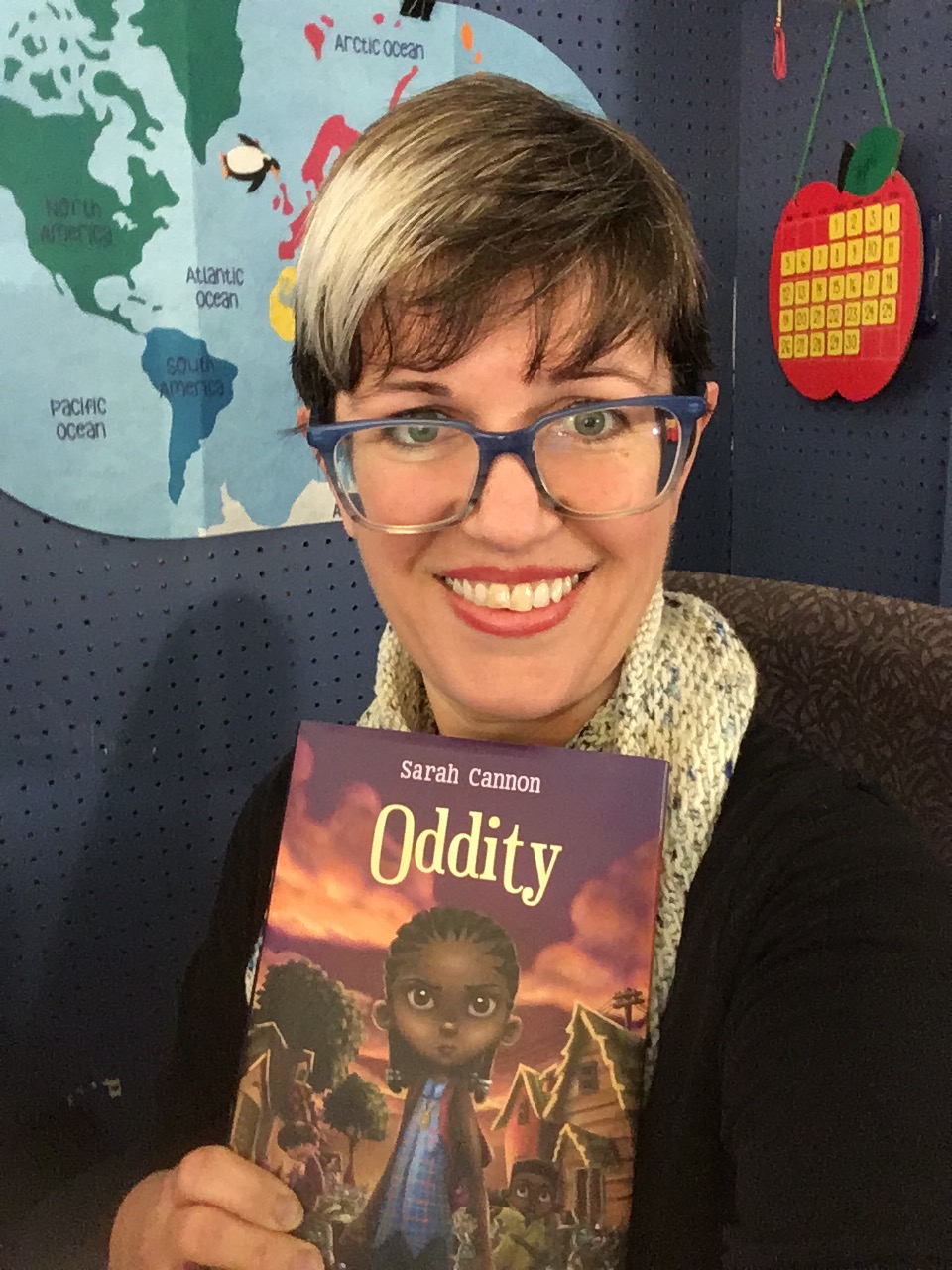
Sarah Cannon, author of Oddity, has lived all over the U.S., but right now she calls Indiana home. She has a husband, three kids and a misguided dog. Sarah holds a B.S. in Education. She’s a nerdy knitting gardener who drinks a lot of coffee, and eats a lot of raspberries.

She is probably human.

Find her on Website | Twitter | Facebook

Spooky Mashups and How To Create Them

I love a good mashup. My two favorite T-shirts are mashups, one of The Little Prince and Star Wars and another of Back to the Future and Tin Tin. They’re the best.

What is a mashup? If you haven’t heard of these ingenious things, mashups are where you take two things that aren’t usually together and put them together in a new, unique and wonderful way. Like Star Wars and Snow White, my third favorite T-shirt, where the designer used that classic picture of Snow White surrounded by forest animals and birds and swapped her for Princess Leia in the same pose.

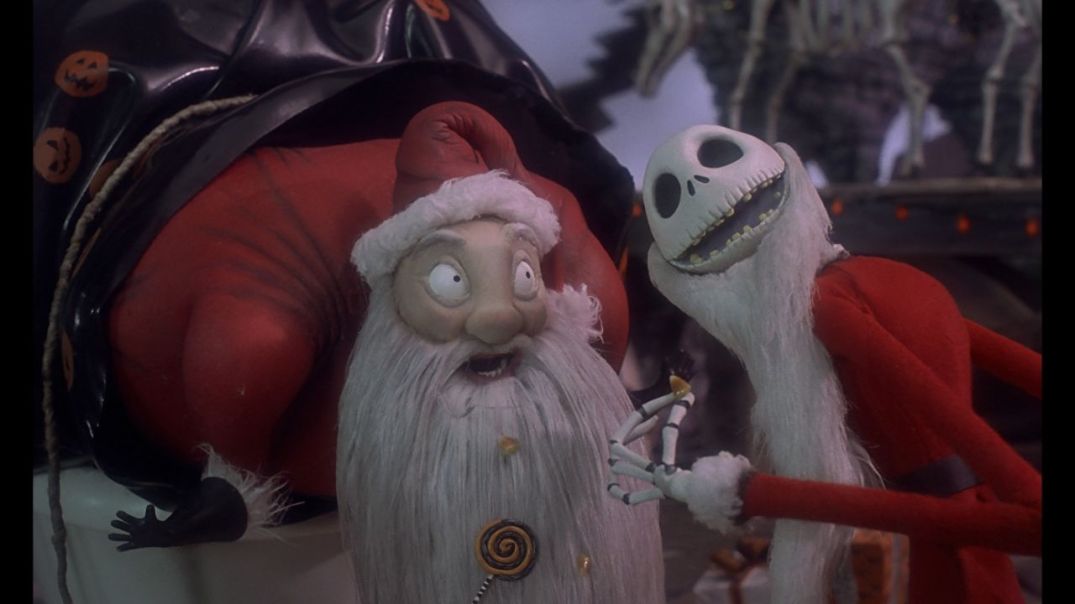
Here’s another: the movie The Nightmare Before Christmas (that’s the movie in the picture above). I love this movie, and this is one of many story mashups that blend different types of stories to make something new, unique and wonderful. In this case, it’s spooky and Christmas and musical. Three types of stories you wouldn’t ordinarily think go together, but if you’ve seen The Nightmare Before Christmas (and if you haven’t, I highly recommend you rush to watch it — after you’ve finished reading this post, of course), you’ll know it is indeed unique and wonderful.

Blending a spooky story with another genre is one of my favorites to write. It keeps the spooky element but also takes it further. Like with my book, THE BOY, THE BOAT, AND THE BEAST, the boy is lost on a mysterious beach where everything is trying to hurt him. That’s the spooky part, but he’s also trying to discover what happened to him, so there’s mystery too. Plus there’s magical elements to the story, so it’s also contemporary fantasy.

Here are some other examples of spooky mashup books:

Spooky and funny — NIGHT OF THE LIVING CUDDLE BUNNIES and FROM SUNSET TILL SUNRISE by Jonathan Rosen, DR. FELL AND THE PLAYGROUND OF DOOM by David Neilsen

Spooky and historical fiction — THE GHOSTS OF ORDINARY OBJECTS by Angie Smibert, THE CHARMED CHILDREN OF ROOKSKILL CASTLE by Janet Fox

Spooky and fantasy/contemporary fantasy — SKELETON TREE by Kim Ventrella, MOTLEY EDUCATION by S.A. Larsen, ODDITY by Sarah Cannon

Spooky and mystery — EVANGELINE OF THE BAYOU by Jan Eldredge, THE PECULIAR INCIDENT ON SHADY STREET by Lindsay Currie

Spooky and adventure — BONE HOLLOW by Kim Ventrella, BEYOND THE DOORS by David Neilsen

If you haven’t read these yet, do! They’re fun, and you’ll learn about spooky mashups. Reading is one of the best ways to learn about writing. (Also, all these books are in our Spooky Reading Challenge, so you could win prizes!)

But how can you come up with your own spooky mashup ideas?

For this, I want to borrow from J.K. Rowling’s Harry Potter world (a series that’s mostly fantasy but also has some spooky). Remember the boggart from HARRY POTTER AND THE PRISONER OF AZKABAN? If you don’t, check out the entry on the Harry Potter Fandom wiki. Since boggarts change into your biggest fear, Professor Lupin teaches Harry and his friends that the best way to combat them is to think of something funny so the boggart will be both! Ron Weasley’s biggest fear is a giant spider, so he imagines a spider wearing roller skates. Pretty funny, huh?

This is like mashups. Taking two things that ordinarily wouldn’t go together to come up with something new, unique and wonderful.

You can use this idea to create your own spooky mashup. Step 1: Think of something spooky. Step 2: Think of something that’s very different. It can be something funny, an action you love doing, or a different type of story that you love to read.

For example, say in step 1, you think of werewolves. They’re pretty spooky. Then in step 2, you think of skateboarding.

Now, with the help of a what-if question, you can turn this into a mashup story. What if a kid had the chance to compete in the world’s best skateboarding contest, but the night before he’s bitten by a werewolf? And the contest is at night and during the full moon? And the kid discovers that a group of werewolves are planning to be at the contest to attack everyone in the audience???

I want to read that story. 🙂

What are your favorite spooky mashup stories?

Have any ideas for your own spooky mashup?

Tell me in the comments.

The Graveyard Hook

When this group of “spooky authors” first began chatting it emerged that many of us had graveyard experiences as kids.

What???

Now, I don’t think that having such a might-be-creepy background is a requirement for writing spooky books, but it is interesting. Right?

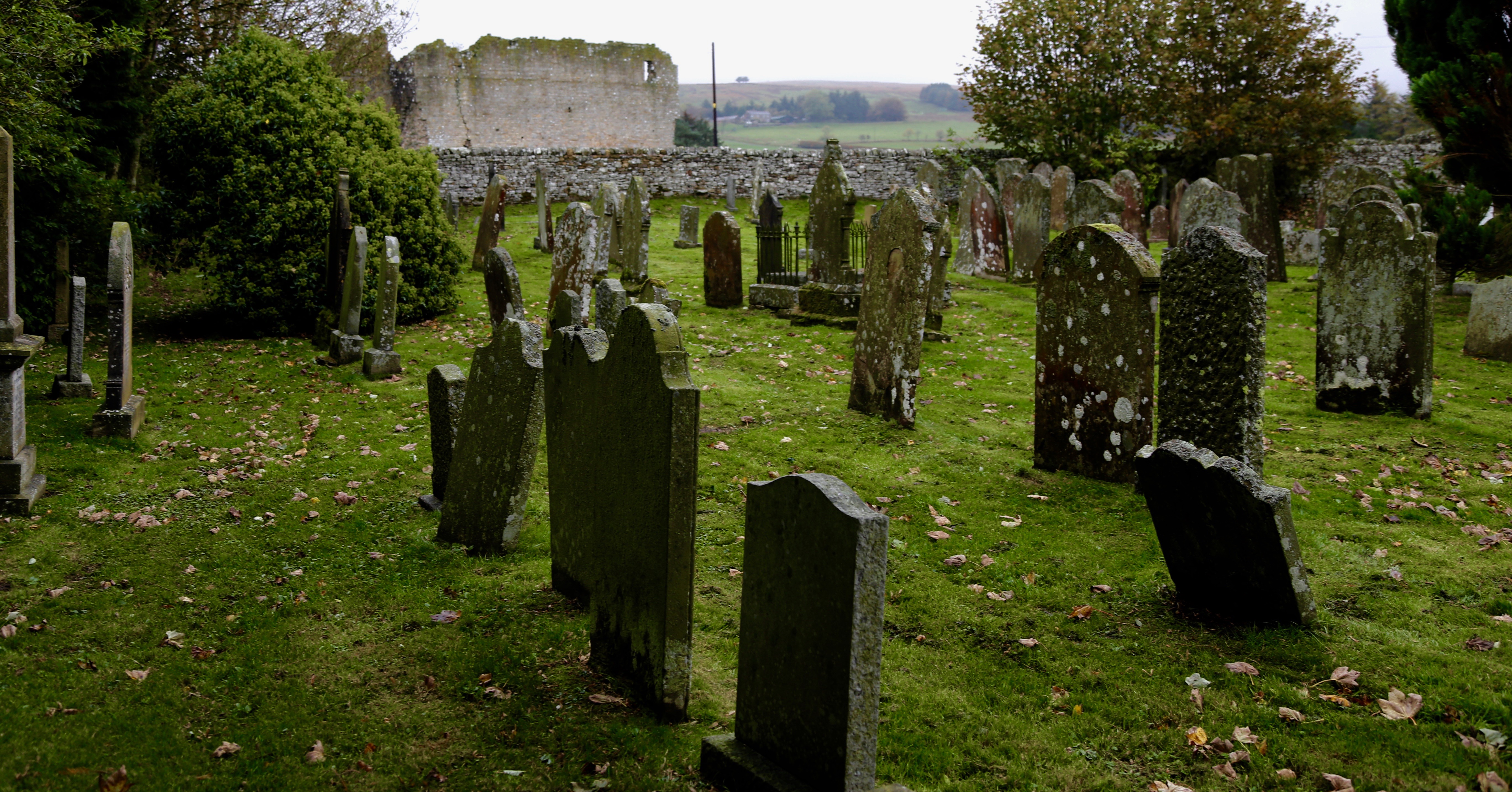
I have my own graveyard experience. My dad was an Episcopal priest, so we lived next door to the church, which meant next door to the graveyard. This was a very old New England church. And a very old graveyard. But that didn’t bother me. I found my own secret spot inside the graveyard, where I would take my reading, and my homework, and my daydreams. It was a little nook with a big headstone on one side and overgrown shrubs on two other sides, so I could sit there completely hidden for hours. I never thought of it as scary…then. Of course, there was also an underground mausoleum with a broken door, and I looked inside that tiny dark place more than once – on a dare, but also because I was curious.IMG_0259

Did I see ghosts in that graveyard? You can ask…

I’ve asked some of my fellow spooky authors to tell us about their graveyard “hooks”:

Jonathan Rosen: I grew up in a section called of Brooklyn called Gravesend, which was settled in around the 1640’s. Such a creepy name, and as a matter of fact, that’s why I named the town in my book, Night of the Living Cuddle Bunnies, Gravesend. I figured, why make anything else up? The reality is creepier than what I could come up with. I lived right next to Gravesend Neck Road, and if you followed it all the way, it led to a really old cemetery, which we used to go exploring. It was right in the middle of a neighborhood, near homes. So creepy that everyone was living around it, with tombstones dating back hundreds of years. I was fascinated by that and it always spurred the imagination of what it was like to live right next to this old cemetery.

S.A. Larsen: As an elementary-age child, I used to visit our town cemetery often with my grandparents. By the time I was middle school and high school age, both my grandparents had passed away, and I found myself drawn to that same cemetery – which I preferred to call the boneyard much like my main character, Ebony Charmed in Motley Education. I’d stroll what felt like endless rows of graves after graves, lifetimes after lifetimes. I could create unseen worlds and playgrounds for the dead. (I think that’s why I fell in love with Lydia the first time I watched Betelgeuse; she got me.) Sometimes, when I’d find an interesting name etched on an old tombstone, I’d sit and stay a while. And crypts? They were way cool! Who was in there? Were they really in there? OMGosh, I needed to know! Weird? Maybe, but I was completely fascinated by who these people were, what kind of life they led, and what they left behind. I was never frightened there; not really. Of course, there were times my mind would play tricks on me, fooling me into thinking I saw something I didn’t. And then there were the times during middle school when a group of use would wait until dark, sneak into the cemetery (no telling!), and scare the screams out of each other. I just loved that!

Sam Clark: I didn’t live next to a graveyard, but when I was doing my A-levels in England, I used to walk home from school and there was a graveyard smack bang in the middle of a short cut. And, given that it was an old English town, the graves were ancient. Many had slabs of concrete over the actual grave, as well as headstones, and a lot of the slabs were broken. It was easy to imagine bony fingers inching around the broken pieces and pushing up! In the summer, it wasn’t too much of an issue. I’d walk through there, but I’d walk quickly with eyes darting around to make sure no zombies were rising. In the winter, though, when it got dark around 4pm, I only took the short cut once. I accidentally got locked in the graveyard and had to climb the gate on the other side to get out. I scrambled up that gate so fast! I walked the long way home after that.

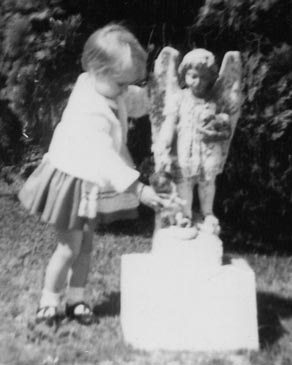
Jan Eldredge: A few times a year, my parents would take us to some of the cemeteries along the Mississippi Gulf Coast so we could tend to our family gravesites there. At one particular cemetery, there was a statue of a little boy angel standing a few rows over from my great-grandmother’s grave. From the time I could walk, until I grew too old for such things, I would always wander over and talk to him. Many years later, I went back to that cemetery, hoping to see my little angel friend again, but he was gone. I don’t know what happened to him. My guess is that he’d been damaged in a hurricane and the caretaker had hauled away his remains.lil-jan

It’s funny how I never really thought about it, but graveyards appear in many of the stories I’ve written. I actually find them to be beautiful and peaceful places . . . as long as I visit them in the daylight.

Patrick Moody: I grew up in a very close knit neighborhood in Trumbull, CT. A small public library sat at the bottom of the street, and up the hill, rounding a corner, where my house stood, a long rock wall separated Hilltop Circle from the Nothenagle Cemetery (that’s quite a name, isn’t it?). The cemetery was a mix of old and new. The first people to be laid to rest were the Nichols family, who’d founded the area in the late 1600’s. Their plots were set with stone monuments towering seven or eight feet tall, entire lines of the family collected together behind wrought iron fences. The Nichols were in a corner, where the forest had begun to creep in over the grass, like it was coming to swallow up the graves. That part of the cemetery was perpetually covered in shadow, and if there was ever a truly spooky spot, that was it.

Myself and the other neighborhood kids loved exploring the cemetery. It was our playground. Our sanctuary. Being an old boneyard, it didn’t get many visitors. For us, it was a place where we could be free, out from under the watchful gaze of those ever curious “grown ups”. None of us found the place scary, at least not in the daytime. We’d walk through the rows, reading the names inscribed in granite and marble, and would talk about the lives of the people laying sleeping beneath our feet. I think that’s where my knack for storytelling really began. I was endlessly curious about the residents of the yard. What they were like in life. Who their families were. What they did for a living. How they saw the world through the eyes of their time.

We would take grave rubbings from the more artistic markers, and I was endlessly fascinated by the images of angels, and in some cases, figures from other cultures’ mythologies. Norse and Celtic runes were there in good numbers.

At night, on those summertime Saturdays when we didn’t have a care in the world, the cemetery became a magical place. As fireflies danced between the rows, we’d play hide and go seek, using the graves, bushes, and trees as our hiding spots. Sometimes we’d play capture the flag, or flashlight tag. When we didn’t really feel like chasing each other in the dark, risking tripping over a gravestone (or breaking it…that wouldn’t have been good), we would post up in a comfy area, usually inside the Nichols family plot behind those fences, and try to best each other with our scariest ghost stories.

We walked a fine line between embracing the inherent “scariness” of the graveyard, and looking at it as a place of practicality: literally, seeing it as a place for the dead to be lain to rest. You can either be scared, or at least mildly creeped out, or you can be interested in the cultural aspects of it. I found myself clinging to both: the ghostly aspects, and the way that we as Americans (or in a broader sense, the Western world), view and experience death.

Needless to say, the cemetery shaped me. Probably in some ways I haven’t even recognized. But I do know that I wouldn’t be a writer today, or an artist of any kind, had I not spent my youth dodging between those tombstones alongside my friends, exploring our moonlit kingdom of granite slabs and towering statues.

Fun stuff here, right? Don’t forget to follow us on Twitter @spookymgbooks


Overcoming Spooky Fears with Cynthia Reeg, Author of From the Grave

Morning Spookies! I’m super psyched to share this next spooky author with you. She’s a former librarian (tosses confetti) who loved riding bikes and playing baseball as a kid; and reading, of course. She also has an adorable Schnoodle pup named Holly. ***Here on Spooky Middle Grade we love our furry friends! And if you’ve skyped with us, you’ve probably met a few. Let’s peek at her books first. Isn’t Frank the cutest?!!!

Welcome Cynthia! We’re so glad you’ve stopped by Spooky Middle Grade! Let’s start with a bit about your spooky books and something readers don’t know about your main character Frank.
Not only are they spooky, but they’re also a little kooky, and super exciting fantasy stories–I think. 🙂

Frank’s full name is FRANKENSTEIN FRIGHTFACE GORDON—He’s too blue, too neat, and too tame to be considered a real monster.

I love his middle name! #Spooky Woot!

So he and the other misfits are put into the Odd Monsters Out class at their school, Fiendful Fiends Academy, to change their wayward ways. But Frank is more interested in showing they are monster enough–just the way they are!

Smart monster.

Why do you like writing spooky books?

I was a scaredy cat as a child who could never watch the monster movies with my brothers. Perhaps this is my chance to control the monsters now–although my monsters do still surprise me at times. And as a former librarian, I know how much students LOVE to read spooky books.

Yay for spooky books! 

What do you think young readers can gain by reading spooky books year round?

We all enjoy a good fright from time to time. Something dark. Something unexpected. Something creepy–and most likely slimy. Reading spooky books can help us face real fears and challenges in our own lives. Facing a classroom bully might seem easier when a reader sees how Frank stands up to Malcolm McNastee or evil Principal Snaggle!


What’s your favorite thing about being a published author?

I love seeing students excited and entertained by my monsters. How cool is that to know that these funny, crazy, endearing characters who stepped out from inside my head are here now to hang out with young readers who are eager to be part of the Uggarland adventure. I truly love helping kids get excited about reading and writing through my stories and classroom visits.

Care to share your one piece of writing advice to newer writers?

Read, read, read. Write, write, write. Study the craft. And hang out with kids!

Please let our readers know what your working on now or what’s up next for you.

I have a number of projects I’m working on now from a couple of nonfiction manuscripts–one told in haikus about an endangered Japanese wildcat and the other exploring winds around the world. Plus, I’m polishing a contemporary MG novel with a bit of a mystery and submitting a fantasy baseball story filled with topsy-turvy characters. And finally, I’m in the researching and outlining phase of an alien-focused MG novel which I’m hoping will be truly out-of-this-world!

You are so busy! Make sure to come back and let us know where these projects lead. Can’t wait! Thank you for sharing yourself and your spooky books with us.

About the Author

Cynthia Cynthia Reeg 8/19/2016 www.timparkerphoto.comis a curious librarian who ventured from behind the stacks to become a children’s author. Now she contends with monsters, mayhem, and odd assortments of characters–both real and imagined–on a daily basis. As an advocate for children’s literacy and supreme defender of reluctant readers everywhere, she manipulates words into wondrous kid-friendly creations to be enjoyed over and over again. As one of her poems attests, Cynthia is always reaching for the stars. For more, you can find her: Website | Twitter | Facebook

Readers, did you read any kidlit stories about Frankenstein as a child? As an adult?

Spook On!

SpookyMG_Signature

Talking Death & Douglas: A Conversation with J.W. Ocker.


Hi J, thanks so much for taking the time to hang here at Spooky Middle Grade! Since this site is a community of spooky authors, I figured I’d throw out a broad question first:

What first drew you to the world of horror and the macabre?

I’ve always loved monsters. I feel like they’re the ultimate expression of creativity. You can make a great fictional human character, and that’s fine. Good job. Add them to the massive pile of great fictional human characters. It’s right beside the massive pile of great real-life human characters. But you come up with a new monster? You’ve done something special.

The macabre might’ve gone along with that infatuation. I tell people it’s like having a favorite color. I don’t know why I like dark green. I just do. I don’t know why I think the human skull is the most interesting object on the planet or why I find the ambiance of a 17th century graveyard so appealing. I just do.

You run a very popular blog, ODD THINGS I’VE SEEN (OTIS). Can you tell us a bit about that? How did it come about?

OTIS is an ongoing chronicle of my visits to weird sites and artifacts. I’ve seen thousands of oddities in the 11 years that I’ve been doing OTIS. The project has enriched my life to the point I’m thinking about starting a religion based on it. Especially since the whole project started out of boredom and loneliness and low self-worth and lack of writing projects and other sad things. Gave me a reason to get outside. To see stuff. To exercise my ability to wonder. It also gave me something to write about when I desperately needed it.

Can you give us a few favorite haunts you’ve visited for OTIS?

The Capuchin Crypts in Rome (especially the Pelvis Room!); the Cushing Brain Collection at Yale; the everburning ghost town of Centralia, Pennsylvania; a rest stop full of carnivorous lilies on the coast of Oregon. My favorites change every day.

Your non-fiction books have garnered a lot of attention and critical acclaim. Did the initial ideas spring from your travels for OTIS, or had you always wanted to focus on that specific subject matter?

OTIS started it all, 100%. If it weren’t for that project, I might still be unpublished. It gave me material, it gave me an expertise, it taught me writing discipline, it helped me practice nonfiction, it gave me enough of an audience to support the first book. And the second book. And has probably kept me in the publishing game to this day.

Your first MG novel, DEATH AND DOUGLAS, hit the shelves this past October. Can you talk a bit about your experience delving into the world of MG fiction?

Ha. It’s so different from my nonfiction experience. My nonfiction readers contact me and basically chat shop. They tell me the stuff they’ve seen and we exchange tips and experiences. It’s a really cool author-reader relationship.

Middle grade is a little…boggling. Seeing my book in the kid’s section of a bookstore surrounded by Dr. Seuss art and images of Harry Potter and Disney characters is surreal. Getting invited to give talks at elementary schools feels…not right. My eldest daughter coming home from school to tell me this friend or that friend read Death and Douglas and liked it is not something I know how to react to.

Get this, earlier this year, somebody showed me an Instagram photo of a middle-grade girl (someone I didn’t know) dressed as Douglas for National Book Week at her school. That gets me teary and is completely formidable and is something I’ll remember the rest of my life.

DEATH AND DOUGLAS, deals with some pretty intense subject matter. More so, I’d say, than any middle grade horror I’ve read in a long time. Did you ever struggle with the idea of it being too dark for younger readers? If so, how did you find that balance?

Oh man, thanks for saying that. I wanted to push it as far as I could. I wanted it to seem dangerous. When I was a kid, the books that opened my mind and addicted me to reading me were the ones I thought my parents would disapprove of if they knew what was in the book. They were my first experiences of independence. And I wanted Death and Douglas to seem like that. I wanted it to be a book that kids slid out from beneath their mattresses and read by flashlight under blankets after their parents went to bed. The difficult part was, I also wanted to write it in a way that parents would actually be okay with the story if they read it themselves. Well, the cool parents, anyway.

Plus, I like saying that I wrote a kid’s book about a serial killer.

That said, I gave my wife the first third of my current WIP, and she thinks it’s too scary for kids. I don’t know if she’s a cool parent.

In D&D, The Mortimers are a family of morticians. Personally, I’ve always been fascinated with our society’s views on death. Did you set out to write a book set around a funeral home and mortician culture, or did that come later as the initial mystery began to unfurl?

I wanted to write a book about a kid in a morbid setting. That was the impulse. Since Neil Gaiman already wrapped his stupid, talented, bestselling fingers around the graveyard with The Graveyard Book, I looked for a different morbid setting. The funeral home worked out nicely. It gave me the chance to really turn up the morbid  influences on what is otherwise a pretty ordinary kid. And write a scene in which a couple of kids sneaking into an embalming room at midnight.

As a fellow New Englander, I felt you captured the feel of October and Halloween in NE so well. Have you noticed any regional Halloween differences/traditions throughout your travels? Who do you think does it best?

New England does it best. It’s why I moved up here from the DC area ten years ago. As to why Halloween is so rich here, I think it’s the quality of our foliage and the style of our architecture and the age of our tombstones. We’ve hanged witches and disinterred vampires here. It’s the birthplace of King and Poe and Lovecraft. Jackson did most of her best work here. The entire area sprang from colonists who fully believed in a rich world of monsters who all wanted to devour their bodies and souls. It’s just a spooky place. But I also love the Hudson Valley of New York. That place is awe-inspiring during the autumn months, as well.

Sadly, Halloween has passed, but here at Spooky MG, we like to keep the spirit alive year round. What are some of your favorite horror films or television shows? Any recommendations for our readers?

My unholy trinity of horror movies is The Texas Chain Saw Massacre, Psycho, and Pumpkinhead. A movie I’d recommend that came out this year is The Witch in the Window. It’s low-budget film from Vermont that is a sweet and spooky tale of a father and a son and a house. You could watch this with middle-graders. Probably. I tried, but my eight-year-old ran out of the room the first time said witch popped up in said window.

What advice would you give to our audience of aspiring young writers?

Write. Keep writing. Finish what you’re writing. Start something new. Finish that, too. See life through a glowing screen with magically appearing letters. That’s my fiction writer advice, anyway. The nonfiction writer in me would like to politely interject that they also need to go out there and see stuff. Everything. Shove it through the black holes in your irises until your frontal lobes are swollen and hurting and your fingertips are tingling to get every piece of information saved up onto the white screen.

So that’s the advice. Feed both the black holes and the white screen.

Give us one fun fact about yourself

I own one of Ray Bradbury’s jackets

J.W. Ocker is the Lowell Thomas and Edgar Award-winning author of strange travelogues Poe-Land: The Hallowed Haunts of Edgar Allan Poe, A Season with the Witch, and the Grimpendium books. He is also the creator of OTIS; Odd Things I’ve Seen (oddthingsiveseen.com) His latest book is a work of children’s fiction, Death and Douglas, a Halloween mystery novel about a boy, his funeral home, and the killer who keeps filling it. Ocker’s work has appeared in the Boston Globe, CNN, The Atlantic, The Guardian, and other places people stick writing. He’s from Maryland but has lived in New Hampshire for a decade. Visit him at oddthingsiveseen.com


Haunted House Tales Don’t Always Take Place in a Haunted House

The Haunted House is one of the oldest spooky story settings in literature.

Scholars have traced this time-honored meme all the way back to the Stone Age and a series of cave paintings depicting four frightened cave teens entering Ye Olde Abandoned Cave and getting attacked by the ghost of Og who really doesn’t want other cave people messing with his cave even though he was stomped to death by a woolly mammoth a couple of years back.

That’s one interpretation, anyway…

As I travel around the country bringing the joys of all things spooky to elementary and middle school students, the discussion of The Haunted House is always one of my favorites. Nine times out of ten, the wisdom I share on the subject blows the kids’ minds (the tenth time I usually get chased by an angry mob to the city limits).

See, when you think of a haunted house story, you tend to think of a story about… a haunted house. The Haunting of Hill House. The Haunting. The Haunted House on a Hill. The Hill House Haunting. Things like that. But I have a few other favorite haunted house stories of which you may not have thought: Jurassic Park. Alien. A Nightmare on Elm Street.

Jaws.

In fact, for my money, Jaws is one of the best Haunted House films ever made. It’s almost the perfect Haunted House film.

“What? But… what are you…? There’s no….!! MY MIND HAS BLOWN!!!”

Relax. Allow me to explain.

The first thing to know about Haunted House stories is that there are RULES. Follow the rules, and everybody’s happy. Deviate from the rules, and the story doesn’t quite work. Simple as that. And the first rule of Haunted House stories is that they need to include a man-eating shark.

Actually, no.

The first rule of Haunted House stories is that they take place in an enclosed location from which there is no escape. The characters are stuck there and have to deal with what is going on. No putting it off until morning, no magical heel-clicking, no climbing out a window and leaving it for the next idiot who stumbles along.

The haunted house in Jaws is the ocean. In Alien it’s the Nostromo. In Jurassic Park it’s the island. Nightmare on Elm Street? Their dreams.

Next, you need something evil in the enclosed location. This can be anything–ghost, monster, dentist, you name it. This may seem obvious, but it’s important enough to stress. Otherwise you get a story of a bunch of people trapped in a room who take out their phones and play Fortnite until they’re rescued. Boring.

The third thing you need for a haunted house story is a collection of flawed characters. It’s no good having just one character, you need a bunch of them. Their flaws may be as simple as she or he lacks self-confidence, or they haven’t yet gotten over the loss of a loved one, but they all have something wrong with them. Maybe they think they’re better than everyone. Maybe they are obsessed with washing their hands. It really doesn’t matter as long as there’s an identifiable flaw.

The reason the flaw is important is because it generally leads to their death as the characters are taken out one by one. In general, anytime a character in a haunted house story finds himself or herself alone, you can be pretty sure they’re about to die. How does this translate to Middle Grade (since we generally don’t turn our Middle Grade books into blood baths)? They are taken out of commision. Knocked unconscious. Trapped in the cupboard. Turned into a newt.

And this happens because of their flaw. The character who lacks self-confidence didn’t think he can make the jump over the yawning chasm after everyone else has jumped across. And because he doesn’t jump, he’s captured by the seven-eyed monstrocity chasing them. And then eaten.

The last rule to remember is that only the innocent (and dogs) survive. Haunted House stories grew out of parents’ need to keep children alive.

“Mom? Can I go play in the abandoned glass, needle, and razer blade factory?”

“No.”

“Why not?”

“Because I said so.”

“Why not?”

“Because it is dangerous.”

“Why not?”

“BECAUSE IT’S HAUNTED! OK? THERE ARE GHOSTS IN THERE THAT WILL SUCK OUT YOUR BRAINS!”

“Oh. OK.”

By ensuring that only the innocent survive, we are subconsciously teaching our children to be good citizens.

“You should wash your hands, Billy. Remember when SallyJesse didn’t wash her hands in He Vomits On Your Grave? She exploded. You don’t want to explode, do you, Billy? Better wash your hands.”

Yes, spooky stories make for valuable life lessons.

And yes, the dog always survives.

All of these rules aren’t meant to constrict a writer in plotting out a story, rather they are intended to serve as a guide. If you know the rules, you can break them and know exactly what you are doing and everybody is happy. Haunted House stories are some of the most enjoyable spooky stories around. Writing one can be a whole lot of fun.

Just make sure the dog survives.

Happy haunting!